
These are unprecedented times. If your home business has been affected by the coronavirus pandemic’s impact on our economy, you are not alone. Many entrepreneurs are struggling to make ends meet and must find creative ways to redirect or reorganize their small businesses to adapt to today’s market.
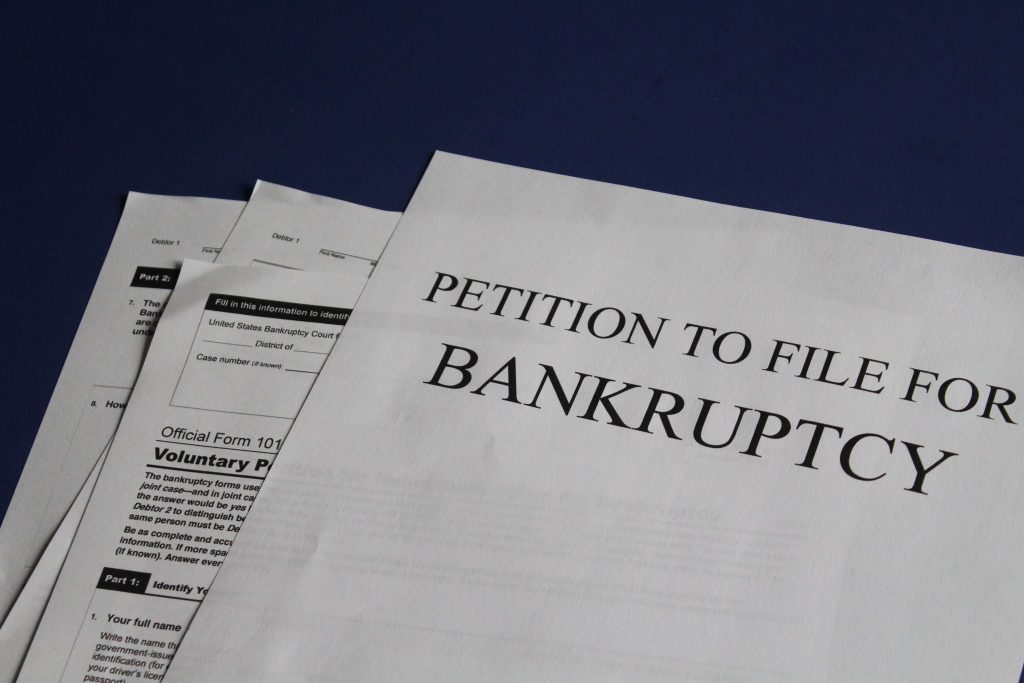
You have options, and one of them is to file a bankruptcy petition. Bankruptcy does not necessarily mean the end of your dream of owning and operating your own business. You can use bankruptcy to reorganize your debt, both business and personal, and save some money so that you can continue business operations, leaner and meaner.
But if the time to close the doors on this particular business venture has come, you can also use a bankruptcy filing to liquidate any business assets and be discharged of liability for both business and personal debt. Later, you can always start another business using the knowledge you’ve gained from this experience.
Here’s how to use personal bankruptcy filings to help your small business.
Who Can File Personal Bankruptcy on Business Debt?
If you are a single-member LLC or a sole proprietorship, you can file a personal bankruptcy case and deal with business debts too, because you and your business are considered one taxable entity.
If you have incorporated, have partners, or are one of many members of an LLC, you cannot file personal bankruptcy and discharge the debts of your business. However, if your business files business bankruptcy, you should consider a personal bankruptcy filing if you have personally guaranteed any business loans, because you will still be liable for that debt after the business gets its discharge and/or liquidates.
Filing Personal Chapter 13 Bankruptcy
What is Chapter 13 Bankruptcy?
Chapter 13 bankruptcy is known as reorganization bankruptcy, because you file a three- or five-year repayment plan and pay arrears on secured or priority debt over time. When the plan is fully funded and complete, remaining unsecured debts are discharged and you move on, all caught up with your secured debt obligations and free of most unsecured debt.
Who Can File Under Chapter 13?
Chapter 13 is for individuals who can show they have a steady income stream and can afford to pay their monthly Chapter 13 plan payments. If you have no income, you might consider filing a Chapter 7 petition instead.
How Does Chapter 13 Bankruptcy Work?
To commence a Chapter 13 filing, you complete a petition and schedules disclosing your personal information, contact information, and all income, expenses, assets, and debts. You will also have taken an online credit counseling course and will file a certification of completion.
With your initial filing or shortly after, you will file a proposed Chapter 13 plan detailing how your creditors will be treated. In general, most unsecured debt, such as credit card and medical debt, is discharged. The plan allows a debtor to catch up on arrears on secured or priority debts. Often your attorney will allow you to pay all or some of the attorney fee through your plan, making it more affordable for you to file.
You will attend a 341(a) meeting with your attorney and the Chapter 13 Trustee, who will verify your identity and ask you questions about your financial situation under oath. You will then take the online financial management course and your attorney will file the certification of completion.
A confirmation hearing will be held for the court to confirm your Chapter 13 plan. If any creditors raise objections to their treatment under your plan, your attorney must work it out with them before the plan can be confirmed.
Once you have completed your Chapter 13 plan, you will receive a discharge of the remaining unsecured debt, meaning you are no longer personally liable to repay it. You will also be caught up with your secured debt obligations and be able to move on.
How Can My Personal Chapter 13 Help My Home Business?
If you and your business are the same financial entity, there are a host of ways Chapter 13 can help you. In a Chapter 13 filing, you can catch up on the following financial obligations over your three- or five-year plan, if you have fallen behind:
- Mortgage or Rent Payments;
- Auto Loan or Lease Payments;
- Payments on Financed Equipment or Electronics;
- Support obligations, such as child support or spousal support;
- Student loan arrears;
- State or federal fines or fees;
- State sales tax arrears.
The following debts can be partially-paid or left unpaid, depending upon your income stream and what you can afford to pay into your plan. Whatever is left unpaid will be discharged once you complete your Chapter 13 plan:
- Credit Card Debt
- Medical Debt
- Certain Past-Due Income Tax
- Liens that are Stripped-Off
- Auto Loans that are Crammed Down
What is Lien Stripping?
If you have a second or third mortgage on your home, or a HELOC, these can be “stripped off” and discharged as unsecured debt in Chapter 13 bankruptcy if the value of your home is less than the amount you owe on your first mortgage.
For example, if you own a home that was once worth $368,000 and is now worth $284,000 in today’s market. You owe $295,000 on your first mortgage and have a second mortgage in the amount of $25,000. Because you owe more on the first mortgage than your home is currently worth, that $25,000 can be “stripped off” in your Chapter 13 plan and discharged as unsecured debt.
What is Car Loan Cram Down?
If you have financed a car and the car is worth less than what you owe on it, you can “cram down” that loan to current retail value and pay it through your plan at an interest rate of prime plus 1-3%.
Here’s how this works: Let’s say you bought a car almost two years ago for $34,000 and financed $30,000 of it at a rate of 3% over six years. You’ve paid $10,000 on the loan and $22, 818 remains to be paid, accounting for interest. But due to the high mileage and condition of the car, both NADA and Kelley Blue Book show that it is worth only $18,000 retail today.
You can cram that car down to $18,000 and can pay it off over your five-year plan at your loan’s interest rate of 3, paying a total of $19,406. If you have a higher interest rate you could have reduced it to prime plus 1-3%.
In this scenario, you will have paid off your car through your plan and will own it free and clear, and will have saved $3,412. Those with auto loans at a higher rate of interest would save even more!
Filing Personal Chapter 7 Bankruptcy
What is Chapter 7 Bankruptcy?
Chapter 7 bankruptcy is a four- to six-month process known as “liquidation bankruptcy” because the Trustee will seize and sell any non-exempt assets for the benefit of your creditors.
What are Exemptions?
“Exemptions” take your possessions and property out of your bankruptcy “estate” and put them out of reach of the Chapter 7 Trustee, who would otherwise seize and sell them for the benefit of your creditors. There are both state and federal exemption schedules and your attorney will work with you to determine which scheme will protect the most of your property.
How Does Chapter 7 Bankruptcy Work?
Just like Chapter 13, you draft and file a petition and schedules along with a certificate of completion of your credit counseling course. This difference is, there is no repayment plan. You will attend a 342(a) meeting with the Chapter 7 Trustee and your attorney to verify your identity and answer questions about your financial situation under oath. After you complete your financial management course and your attorney files your certification of completion, you wait for the deadline for creditors to object to discharge to pass, and your discharge order is entered.
How Can My Personal Chapter 7 Filing Help My Business?
Chapter 7 can discharge most unsecured debt for you within four to six months. While you cannot continue business operations under the old company name, there is nothing stopping you from creating a new similar company once you receive a discharge.
Take Control of Your Future
Filing either form of bankruptcy is taking control of your financial situation and determining to solve any financial problems you are experiencing. If you want to research some alternatives to bankruptcy, you can always consider filing a consumer proposal, which might be a better solution for your current financial situation. Whatever you decide, know that bankruptcy is not the end. Rather, it is the beginning. You are getting a fresh start. Using your creative entrepreneurship, you will come out of bankruptcy with new ideas about your existing business or a new business, free and clear of old debt and able to move on. Best of luck to you!
