


The demand for Robo-advisors has exploded recently, and it is projected to keep growing. In 2021, the market size for robo advisors was estimated to be $4.13 billion, and it is expected to grow to an astounding $41.83 billion by 2030 according to Grand View Research.
M1 Finance and Betterment are two popular firms that offer similar benefits to investors. M1 Finance is a much smaller firm with $5 billion in AUM (Assets Under Management), while Betterment has $33 billion in AUM and comes in as the number three firm in the robo-advising industry. Betterment falls behind Vanguard Personal and Digital Advisor Services ($190 billion in AUM) and Schwab Intelligent Portfolios ($68.5 billion in AUM).
However, though the features offered by each firm appear to be similar, there are some important distinctions between the two firms that investors will want to consider before choosing a software platform.
First, let’s take a look at an overview of M1 Finance vs. Betterment and what kind of investor each firm is best for.
M1 Finance is best for:
- Active traders
- Occasional account transfers
- Occasional withdrawals
- Multiple account types
- Lower net worth balances
Betterment is best for:
- Passive investors
- Frequent transfers
- More withdrawals
- Getting human advice
- Higher net worth balances
One of the biggest questions around picking an investing platform is the fees. So, let’s take a look at how each platform compares regarding fees.
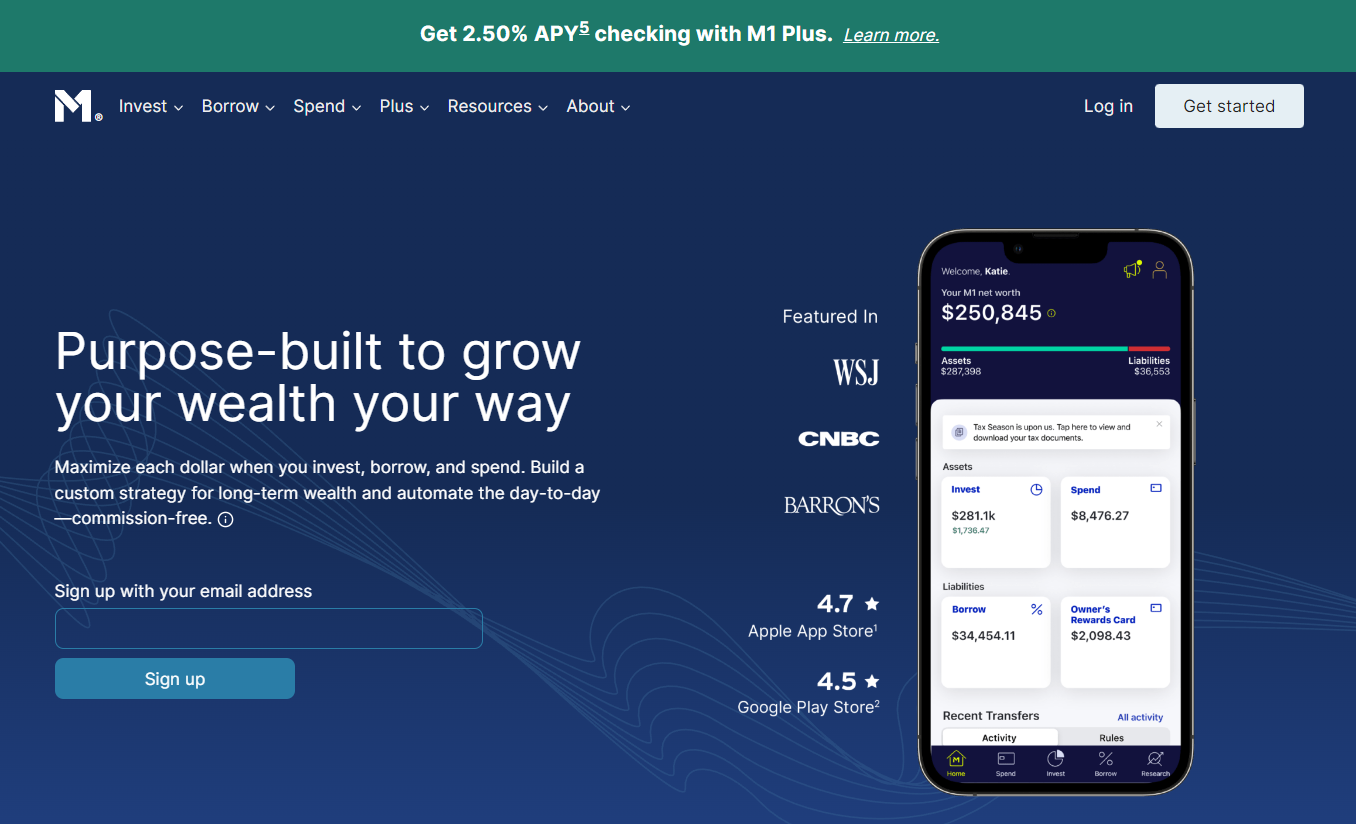
M1 Finance vs. Betterment: Management Fees
Management fees are a significant part of deciding where to invest your money. However, there are other fees associated with M1 Finance and Betterment that are essential to understand.
M1 Finance:
- Management Fees: $0
- Premium Subscriptions: $125
- Other Fees: M1 Finance has additional fees for things like withdrawals, transfers, sales, inactivity, and mail, among others.
Betterment:
- Management Fees: 0.25% (0.15% for balances > $2 million)
- Premium Subscriptions: 0.40% AUM (0.30% for balances > 2 million)
- Other Fees: None
M1 Finance and Betterment both have fees, but as you can see, they vary depending on your goals as an investor and what kind of services you are looking to utilize.
M1 Finance vs. Betterment: Services
The services offered by M1 Finance and Betterment are similar, with the differences coming down to how you want to invest.
M1 Finance
M1 Finance allows investors to create automated accounts that can be optimized for their risk tolerance. In addition, you can choose a customized basket of stocks and funds, or you can invest in one of their expert-created pies.
Furthermore, M1 Finance has a feature that allows investors to buy fractional shares, which allows you to buy stocks like Chipotle, Bookings Holdings, or AutoZone — all of which are over $1,000 per share.
Betterment
Betterment is strictly a robo-advisor platform, and they do not allow the investor to buy individual stocks or ETFs. However, you can select Betterment’s Core Portfolio, which will decide for you based on your risk tolerance. You can opt into other portfolios such as Social Responsible, Smart Beta, and Innovative Technologies.
Furthermore, Betterment also has a unique and clever credit card that has some advantageous perks for users. The Owner’s Rewards Card is a credit card that pays you up to 10% cash back when you make purchases at stores of stocks that you own in your Betterment account. These incentives you to spend money at the retail stores of stocks that you own, and is also a clever way of giving you rewards for supporting the stocks you own.
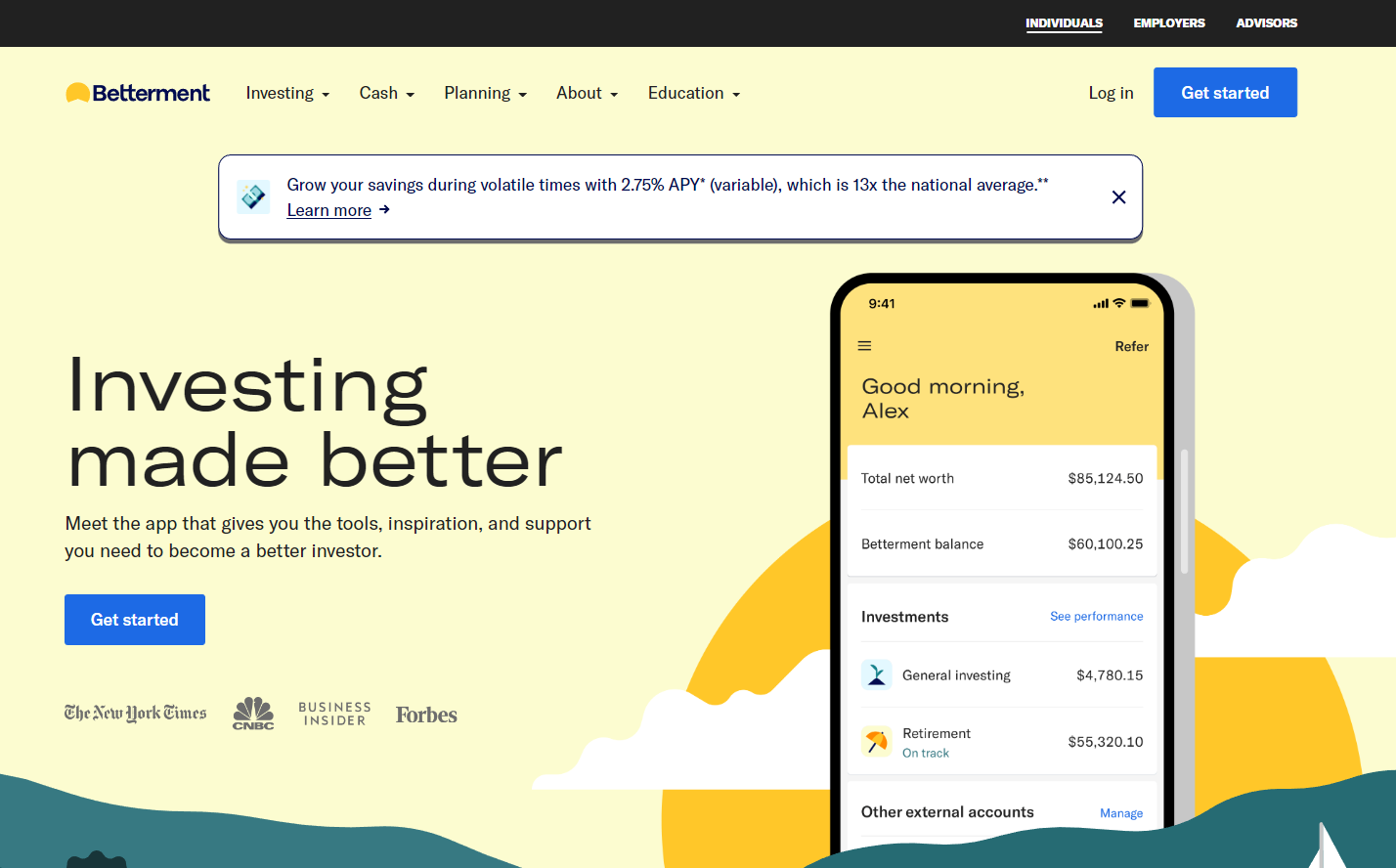
M1 Finance vs. Betterment: Automation
M1 Finance
Once you set your portfolio and asset allocation, you will “auto-invest” any deposits or dividends. Over time, one of your pies might become bigger than you want. In this case, M1 will automatically invest new deposits into the smaller pies to put the asset allocations back to the percentages that you choose. Dividends can also be set up to automatically help in this rebalancing process. You can also manually ask the system to “rebalance” which tells the platform to sell some positions to add to others.
Betterment
Once you have selected your account and have told Betterment your investing goals, all you have to do is deposit funds. Betterment is designed for investors to automate almost everything. You can customize how often and how much you want to invest.
For those with over $100,000, you can access the Flexible Portfolio feature and change your asset allocation mix. You can also access their Financial Planners at no cost. With a lower balance, the cost to talk to a Financial Planner is a low $199.
Betterment automates the following:
- Buying and selling of the ETFs in your selected portfolio(s)
- Dividend reinvestment
- Automatic rebalancing
- Tax Coordination—which balances your asset allocation within the best account
- Tax loss harvesting
M1 Finance vs. Betterment: Conclusion
In conclusion, M1 Finance and Betterment have numerous beneficial features for investors. Choosing between the two is merely a choice each investor will have to make for themselves based on their goals.
If you would like to sign up for M1 Finance, use this link to get started.
If you want to get started with Betterment, use this link to sign up.
