

A great product succeeds because it solves real problems, delights customers, and stands out in the marketplace. This guide breaks down the expanded framework behind product greatness using insights from Ryan Allis and top experts like Marty Cagan, Clayton Christensen, and Eric Ries.
Every thriving business, no matter its size or industry, is rooted in one simple truth: great products win. Marketing, branding, and sales tactics matter—but if the product isn’t strong enough to stand on its own, business growth becomes a constant uphill battle.
Ryan Allis, former CEO of iContact, famously broke down what makes a product great in his book Zero to One Million. His framework remains incredibly valuable, but today’s marketplace is far more competitive, more fragmented, and more customer-driven than when the book was written. To stay competitive, entrepreneurs need a broader, deeper understanding of product greatness—one that blends quality, design, user experience, emotional value, competitive differentiation, and strong financial fundamentals.
This expanded guide takes Allis’ ideas and strengthens them with insights from additional world-class experts, including:
- Marty Cagan, author of Inspired: How To Create Tech Products Customers Love
- Clayton Christensen, author of Competing Against Luck: The Story of Innovation and Customer Choice
- Eric Ries, author of The Lean Startup
- Steve Blank, creator of the Customer Development methodology
- Julie Zhuo, former VP of Product Design at Facebook
Let’s explore what truly makes a product great today—and how to assess whether yours fits the criteria.

Table of Contents

What Makes a Great Product?
Ryan Allis identified several characteristics of a perfect product. Below is the fully expanded and modernized version of those criteria.
1. A Great Product Solves a Real Problem (or Creates Real Desire)
A product becomes truly great when it’s tied to a meaningful problem or powerful desire. Clayton Christensen’s Jobs to Be Done framework explains this well: customers “hire” products to make progress in their lives. They aren’t buying an item—they’re buying a transformation. A great product relieves pain, increases pleasure, simplifies a task, boosts confidence, or fulfills an identity.
Customers don’t buy products — they buy outcomes.
A product becomes great when it clearly delivers one (or more) of these:
- Removes pain or frustration
- Makes life easier or more convenient
- Helps the customer achieve a goal
- Creates joy, identity, status, or emotional value
- Saves time
- Saves (or makes) money
- Offers better performance or usability
Questions to ask:
- What “job” does my product perform for the customer?
- Does buying my product replace an old way of doing something?
- Would the customer be upset if the product no longer existed?
If your product disappeared tomorrow, would customers feel annoyed… or devastated? The stronger the emotional or functional impact, the stronger the product-market fit.
2. It Has a Strong Market Appeal — Whether Niche or Mass
Market size alone doesn’t determine success. What matters is intensity of demand within the market. A niche product can outperform mass-market ones if the niche audience is deeply passionate (e.g., rock-climbing chalk bags, keto baked goods, cosplay accessories).
Alternatively, mass-market products like tumblers, headphones, or planners can scale explosively—but only if they are differentiated and clearly positioned.
Allis points out that products generally succeed when they serve:
- A defined niche with high passion (e.g., Paleo diet snacks, drone accessories)
- Or a broad mass-market need (e.g., toothbrushes, phone chargers)
You don’t need “everyone.” You need the right audience with a real reason to buy.
Pro tip from Eric Ries: Find a small early adopter customer group first.
“These early users validate the concept before scaling.”

3. High Margin Potential (2:1 Minimum, 5:1 Ideal)
Strong margins give your business room to grow—period. Allis suggests at least a 2:1 markup, but 5:1 or higher is ideal for sustainability. This margin allows you to pay for marketing, inventory, operations, shipping, returns, and overhead without suffocating your cash flow.
A 5:1 markup ratio (for example, costing $4 to make and selling for $20) leaves room for:
- Marketing
- Shipping
- Returns
- Platform fees
- Discounts
- Rising manufacturing costs
- Profit
Low margins = high stress, and often, business failure.
Example:
Warby Parker sells glasses for ~$95 but makes them for $15–$30, allowing for strong margins even after marketing and fulfillment.
Low-margin products force you to rely on massive volume or thin profit. High-margin products let you invest confidently in growth, automation, team members, and long-term brand building.
4. High Perceived Value (Higher Than the Actual Cost)
Customers don’t evaluate value mathematically—they evaluate it emotionally. Perceived value determines what customers expect from your product before they’ve even touched it. Packaging, branding, storytelling, social proof, design, and user experience all elevate perceived value.
People judge value emotionally before rationally.
A product with high perceived value could be:
- Beautifully packaged
- Clearly premium
- Endorsed by influencers
- Backed by guarantees
- Designed elegantly
- Presented as rare or artisanal
Julie Zhuo emphasizes the importance of crafting delight:
“Customers remember how a product makes them feel.”
This is why a $5 candle at Target feels wildly different from a $38 candle from a luxury boutique—same category, different story, and therefore different perceived value.
Premium branding can turn an ordinary product into an aspirational one. When customers feel emotionally aligned with your brand, they willingly pay more.
5. Built for Replenishment, Subscription, or Repeat Purchases
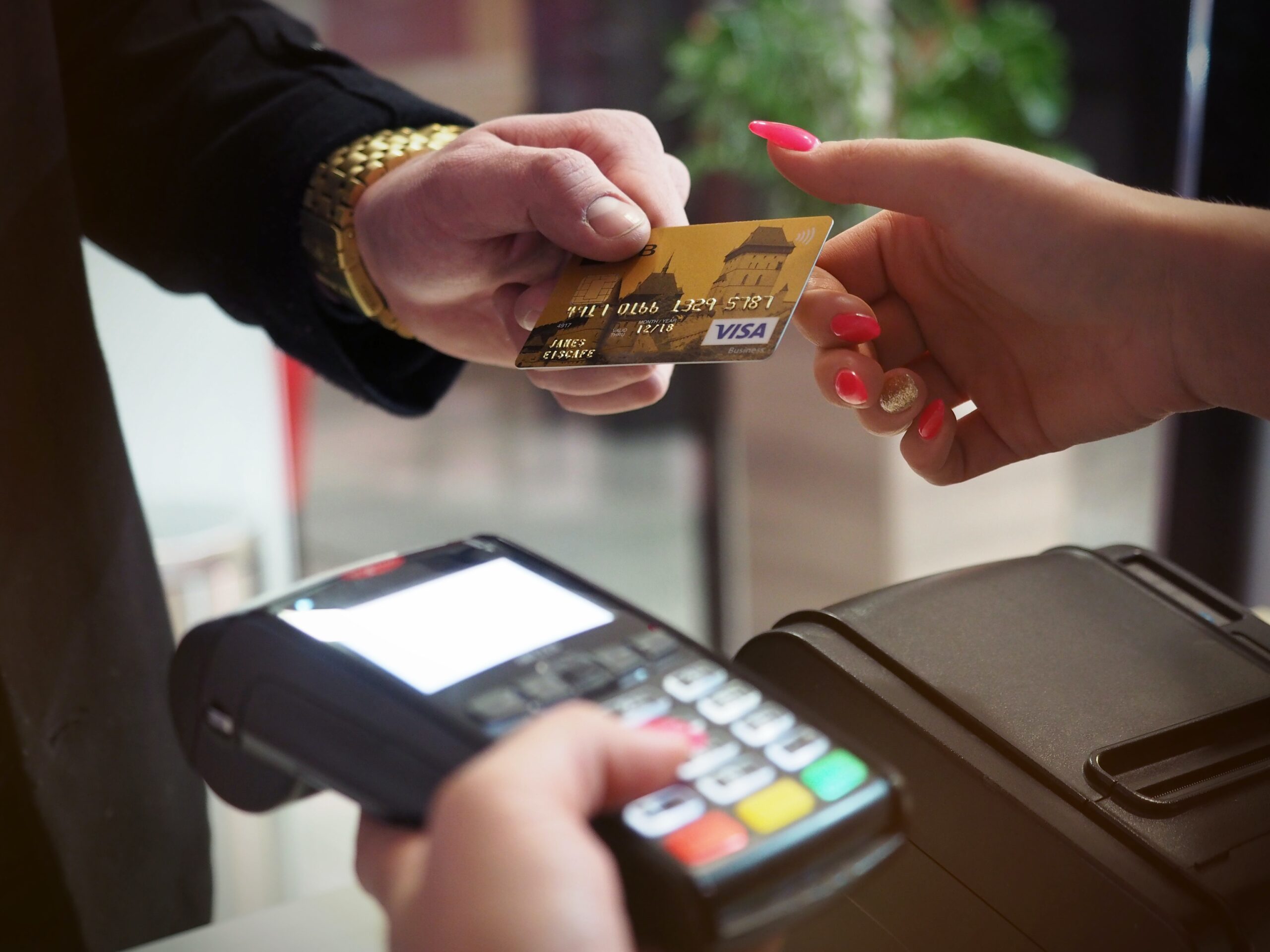
A one-and-done product makes revenue unpredictable, and the one-time purchase model is the hardest to scale. Great products naturally create ongoing sales: refills, upgrades, replacement parts, seasonal versions, or subscriptions.
A great product encourages:
- repeat buying
- subscriptions
- upgrades
- complementary accessories
- reorders due to usage or expiration
Think about razor blades, contact lenses, water filters, skincare, SaaS apps, vitamins, coaching memberships, or printer ink. The more repeatable the need, the higher your Customer Lifetime Value (LTV). Higher LTV means you can outspend competitors in marketing while still making profit.
A great product doesn’t end at one purchase—it becomes part of a customer’s routine. If your product can earn long-term recurring revenue, it becomes exponentially more valuable.
6. Strong Upsell, Cross-Sell, and Backend Product Opportunities
A great product opens doors to more value. It belongs to a product ecosystem that encourages customers to level up—without feeling pressured.
Allis highlights the importance of:
- upsells
- cross-sells
- backend offers
Modern product strategists call this: Customer Lifetime Value (LTV)
The more a customer buys from you over time, the more profitable your business becomes.
For example:
- A fitness brand sells a workout guide → then meal plans → then supplements → then equipment → then coaching.
- A tech company sells software → then add-ons → then integrations → then advanced support tiers.
- A skincare brand sells a cleanser → then toner → then moisturizer → then SPF → then monthly refills.
This value ladder makes every customer worth more—allowing your business to thrive without constantly chasing new sales. The key is to create multiple revenue streams from a single customer.

7. Competitive Differentiation in a Crowded Market
The world is overflowing with products. Standing out matters more than ever. Marty Cagan’s mantra is that successful products must be “valuable, usable, feasible”—but they must also be distinct.
Differentiation can come from:
- superior design
- unique features
- faster delivery
- eco-friendly materials
- personalization options
- outstanding customer service
- a compelling founder story
- a strong community
If customers cannot tell why your product is special, they won’t choose you. A great product makes customers say, “This is exactly what I’ve been looking for.”
8. Easy to Understand, Easy to Explain, and Easy to Use
Complexity kills sales. Customers need to “get it” in seconds. Julie Zhuo stresses that usability and emotional clarity are pillars of product excellence.
A great product:
- communicates its purpose instantly
- delivers value quickly
- requires no manual or learning curve
- feels intuitive or familiar
Even a powerful product fails if it’s confusing.
Ask:
- Can a customer explain this product in one sentence?
- Can they begin using it without a manual?
- Is the value obvious within seconds?
The best products require zero explanation.
The easier the product is to adopt, the faster it spreads through word of mouth. That’s how AirPods skyrocketed—effortlessness is powerful.
9. Cost-Efficient to Produce With Stable, Scalable Supply Chains
Production isn’t just about manufacturing. It’s about predictability, quality control, accessible materials, manageable shipping costs, and the ability to scale without headaches.
Great products have clean supply chains:
- raw materials are stable
- manufacturers are reliable
- inventory is manageable
- shipping isn’t painfully expensive
- quality remains consistent
If your supply chain is fragile, unpredictable, or dependent on one vendor, your business becomes vulnerable. A great product is one you can replicate at scale—without sacrificing quality or profitability.
10. Strong and Measurable Market Demand
Demand is not a guess. It’s measurable. You can validate it through:
- Google search volume
- Amazon sales rankings
- keyword trends
- social media chatter (e.g. Reddit or Facebook group activity)
- Waitlists or preorders
- competitor performance
- customer interviews
- Surveys (Google Forms, Typeform)
Steve Blank insists on “getting out of the building”—meaning you must talk to real users. If people express frustration with current options and show willingness to pay for a better solution, your product has real traction.
Great products don’t rely on hope—they rely on evidence.

Evaluating the Inherent Qualities of Your Product
In addition to Allis’s criteria, reviewing your product’s internal strengths helps you understand whether it delivers real value.
Is the product high quality?
High-quality products build trust, brand loyalty, and organic referrals. Quality includes durability, reliability, function, and finish. Quality is a combination of:
- durability
- performance
- reliability
- consistency
- user experience
- craftsmanship
You must ask:
- Does it work every time?
- Does it break easily?
- Does it meet or exceed customer expectations?
Great quality turns customers into evangelists.
A product that works consistently earns long-term fans.
Is the product effective?
Does it actually deliver the promised results? Real effectiveness is the foundation of strong reviews and repeat buyers.
Examples:
- Skincare that actually clears acne
- Software that truly automates workflows
- Supplements backed by scientific evidence
- A coaching program that actually gets clients results
This is the heart of value.
How valuable are the benefits?
Benefits should be clear, emotional, and practical. A great product increases pleasure, reduces pain, improves efficiency, or enhances daily life.
A great product must improve the customer’s life:
- reduce pain
- increase pleasure
- increase utility
- save time
- save money
- reduce effort
- increase convenience
- improve identity or status
The more benefits, the stronger the product.
Can the product evolve?
Great products have a roadmap: new versions, variants, improvements, accessories, and expansions. Products that can evolve are more sustainable.
Ask:
- Can you add variations?
- Can you scale manufacturing?
- Can you introduce upgrades or version 2.0?
- Are you dependent on one manufacturer?
Product evolution matters as much as the initial launch.

The State of the Marketplace
Beyond the product itself, external conditions determine viability.
Is production cost low enough to support strong margins?
High production costs shrink your marketing budget and limit your growth potential. You must know:
- Can you produce or source it cheaply enough?
- Are materials volatile in price?
- Can production easily scale from 100 units to 10,000?
- Are you dependent on international freight?
Margins must survive real-world conditions, not theory.
What is the current (and future) demand?
Analyze real numbers—not assumptions. A product may be great, but without demand, it’s a hard sell. Demand must be:
- measurable
- provable
- stable or growing
- not just a temporary social media trend
Tools that reveal demand:
- Market research reports (Statista, McKinsey)
- Google Trends
- Amazon Best Sellers Rank (BSR) charts
- Pinterest trends
How strong is the competition?
Competition is normal—but you need an angle. Analyze what they lack, and position your product as the better alternative.
A crowded market is fine — if you differentiate well. But you must evaluate:
- How many competitors exist?
- Are they large and entrenched?
- Do they have brand loyalty?
- Are you entering with a meaningful edge?
Take skincare: massive competition
Yet new brands succeed by owning niches (e.g., sensitive skin, dermatology-backed, cruelty-free).
What substitutes exist?
Sometimes your competitor isn’t another product—it’s another habit or completely different category. Understanding substitutes helps you refine your positioning.
People may not buy your product —
but they might buy something else that solves the same job.
Examples:
- You sell planners → customers may choose Google Calendar
- You sell ergonomic chairs → customers might buy standing desks
- You sell protein bars → customers might buy smoothies
Understanding substitutes helps you position your product more clearly.
How difficult is it to differentiate?
If the market is full of near-identical products, you’ll need stronger branding, better story, or higher quality to stand out.
Ask:
- Can you be different?
- Can you be better?
- Can you be special?
- Can you tell a story others cannot?
Differentiation does not mean being the only one.
It means being the best at something specific.

Summary Table: How to Evaluate How Great a Product Is
| Evaluation Category | Key Questions to Ask | What Great Looks Like | Why It Matters |
|---|---|---|---|
| Problem/Solution Fit | Does it solve a real problem or fulfill a strong desire? Is the “job to be done” clear? | Customers feel relief, joy, or progress after using it; frustration if it disappears. | Strongest predictor of long-term demand and customer loyalty. |
| Market Appeal | Is there a niche or mass-market audience that actively wants this? | A clearly defined, eager audience that either passionately identifies with the product or buys it frequently. | Ensures the product has a stable base of buyers. |
| Margin Strength | Are margins at least 2:1, ideally 5:1? Can you scale profitably? | High enough profit margins to cover marketing, fulfillment, returns, and growth. | High margins fund marketing and make scaling sustainable. |
| Perceived Value | Do customers instantly feel the product is worth more than its cost? | Premium branding, packaging, and experience that elevate emotional value. | Higher perceived value boosts pricing power and conversions. |
| Repeat Purchase Potential | Is the product naturally repurchased, upgraded, or replenished? | Consumables, subscriptions, accessories, upgrades, or add-ons. | Drives high customer lifetime value (LTV) and predictable revenue. |
| Upsell/Cross-Sell Opportunity | Does it fit into a larger product ecosystem? | Easy pathways to higher-tier products, accessories, bundles, or back-end offers. | Maximizes revenue per customer without extra marketing cost. |
| Competitive Differentiation | What makes it meaningfully better than alternatives? | Unique features, design, speed, quality, ethics, or story. | Differentiation prevents commoditization and price wars. |
| Ease of Understanding & Use | Can customers understand it in seconds and use it without friction? | Clear value proposition, intuitive design, effortless onboarding. | Reduces drop-off, boosts adoption, fuels word-of-mouth. |
| Production Feasibility | Can it be produced affordably and consistently at scale? | Stable suppliers, predictable costs, high quality control. | Ensures strong margins and avoids stockouts and quality issues. |
| Market Demand | Is demand measurable through searches, sales data, or consumer feedback? | Consistent search volume, preorders, waitlists, strong competitor sales. | Validates product viability and reduces risk of failure. |
Conclusion
A great product is built on more than clever ideas. It blends customer insight, real demand, exceptional usability, emotional value, strong margins, and a long-term ecosystem of repeat purchases and upgrades. When your product meets these criteria, marketing becomes easier, customer loyalty grows deeper, and your business becomes more resilient.
If customers love your product, understand it easily, differentiate it clearly, and buy it repeatedly—you aren’t just selling something. You’re building a thriving business with staying power.

Key Takeaways
- Great products solve meaningful problems and create strong emotional value.
- Differentiation is essential in today’s crowded marketplace.
- Strong margins (2:1–5:1) are necessary for sustainable growth.
- The best products generate repeat purchases and build product ecosystems.
- Market demand must be measurable—not assumed.
- Supply chain stability is just as important as creativity.
- High perceived value dramatically boosts purchasing behavior.
- Clear positioning and usability accelerate adoption.
FAQs
How do I know if my product is truly great and not just average?
A great product produces consistent results across three dimensions: customer demand, customer satisfaction, and competitive strength. Look for organic signals—repeat purchases, referrals, unsolicited reviews, or customers who recommend it without prompting. Another sign of greatness is when your product becomes the default option for a specific problem. Additionally, analyze customer feedback: do users say meaningful things like “This saved me time,” “This changed how I do things,” or “I’ll never go back to the old way”? If customers willingly promote your product, stick with it long-term, or express frustration when it’s unavailable, you’re no longer in “good” territory—you’re delivering real impact. Greatness is validated by the market, not by opinions.
Is competition a bad sign for my product?
Competition is actually a good sign—it proves people are already spending money in your category. Instead of worrying about competitors, study them. Analyze their weaknesses: slow shipping, generic branding, inconsistent quality, poor reviews, cheap materials, or bad customer service. These weaknesses become your opportunity to differentiate. Many highly successful brands emerged in crowded spaces by only improving one key factor: design (Apple), convenience (Dollar Shave Club), community (Gymshark), eco-friendliness (Allbirds), or storytelling (Glossier). What matters most is how clearly and convincingly you position your product. When you solve the same problem in a better or more emotionally resonant way, customers naturally gravitate toward you—even in competitive markets.
How do I measure real demand for my product?
Demand is measurable using data—not intuition. Start by researching keyword volumes through Google Keyword Planner or Semrush to see how many people search for similar products monthly. Look at Amazon’s Best Seller Rank (BSR) to determine what customers are actively buying. Analyze social media platforms for trends, conversations, complaints, or unmet needs. You can also create a landing page and test if people sign up for a waitlist or preorder. Eric Ries recommends releasing an MVP (Minimum Viable Product) to gauge whether real consumers will pull out their wallets. If people express enthusiasm, frustration with current options, or willingness to pay for a better solution—that’s validated demand. If enthusiasm is low, pivot early. Measuring demand early protects your money and time.
What if I think my product is strong, but sales are still weak?
If your product is solid but sales are sluggish, the issue often isn’t the product—it’s the customer’s understanding of it. Most buying resistance comes from unclear messaging, poor branding, a weak value proposition, or marketing in the wrong places. Start by improving your product description, clarifying the benefits, and simplifying how you communicate value. Then strengthen social proof by adding reviews, testimonials, before-and-after photos, or user-generated content. Also evaluate your distribution channels: Where does your target audience actually spend time? If your marketing appears where the wrong audience sees it, sales will naturally lag. Sometimes just improving packaging, visuals, or positioning unlocks rapid growth. When quality exists but clarity doesn’t, fixing the story usually fixes the sales.
The article was originally published on February 12, 2008 and updated on November 17, 2025.

How do you feel about information products? My mentor James Brausch always talks about them because the markups are insanely high. What’s your take on that?
How do you feel about information products? My mentor James Brausch always talks about them because the markups are insanely high. What’s your take on that?
There’s a lot of great advice in this post on planning your product.
But there’s an important point not mentioned in this post.
In the online world, testing is king.
Everything is testable, and (with enough traffic) you can get meaningful results quickly.
We typically think of testing our pages for their ability to convert traffic to buy a product.
And testing is BORING.
(That’s why testing software such as Muvar is essential to getting this done without going crazy.)
But there’s another use for testing when we’re thinking about developing a product.
Many marketers use testing to discover what the market will buy so they can refine some of the details of an information product before the product is finished.
We can and should be extremely thoughtful in designing a product, but we can’t be seduced by all of our logic. We need to let the marketplace tell us what it wants.
There’s a lot of great advice in this post on planning your product.
But there’s an important point not mentioned in this post.
In the online world, testing is king.
Everything is testable, and (with enough traffic) you can get meaningful results quickly.
We typically think of testing our pages for their ability to convert traffic to buy a product.
And testing is BORING.
(That’s why testing software such as Muvar is essential to getting this done without going crazy.)
But there’s another use for testing when we’re thinking about developing a product.
Many marketers use testing to discover what the market will buy so they can refine some of the details of an information product before the product is finished.
We can and should be extremely thoughtful in designing a product, but we can’t be seduced by all of our logic. We need to let the marketplace tell us what it wants.
Neil … I agree with you about information products. You write the content, repurpose it in any shape or form you want (publish it in your site, compile them in an eboo, put them together in a book) and earn from the same content again and again. That’s why we are in the information business.
Neil … I agree with you about information products. You write the content, repurpose it in any shape or form you want (publish it in your site, compile them in an eboo, put them together in a book) and earn from the same content again and again. That’s why we are in the information business.