


For e-commerce businesses, access to fast, flexible financing can make all the difference in scaling operations and meeting growing demands. PayPal Working Capital and Shopify Capital are two popular funding solutions tailored to online sellers, providing easy-to-access loans without the red tape of traditional bank loans.
Both platforms offer sales-based repayment models that adjust with your revenue, making them ideal for businesses with fluctuating income. However, these two financing options differ in terms of eligibility, loan types, repayment structures, and fees. In this guide, we compare PayPal Working Capital vs. Shopify Capital, helping you determine which solution best aligns with your business model and financial goals.
Table of Contents
What is PayPal Working Capital?
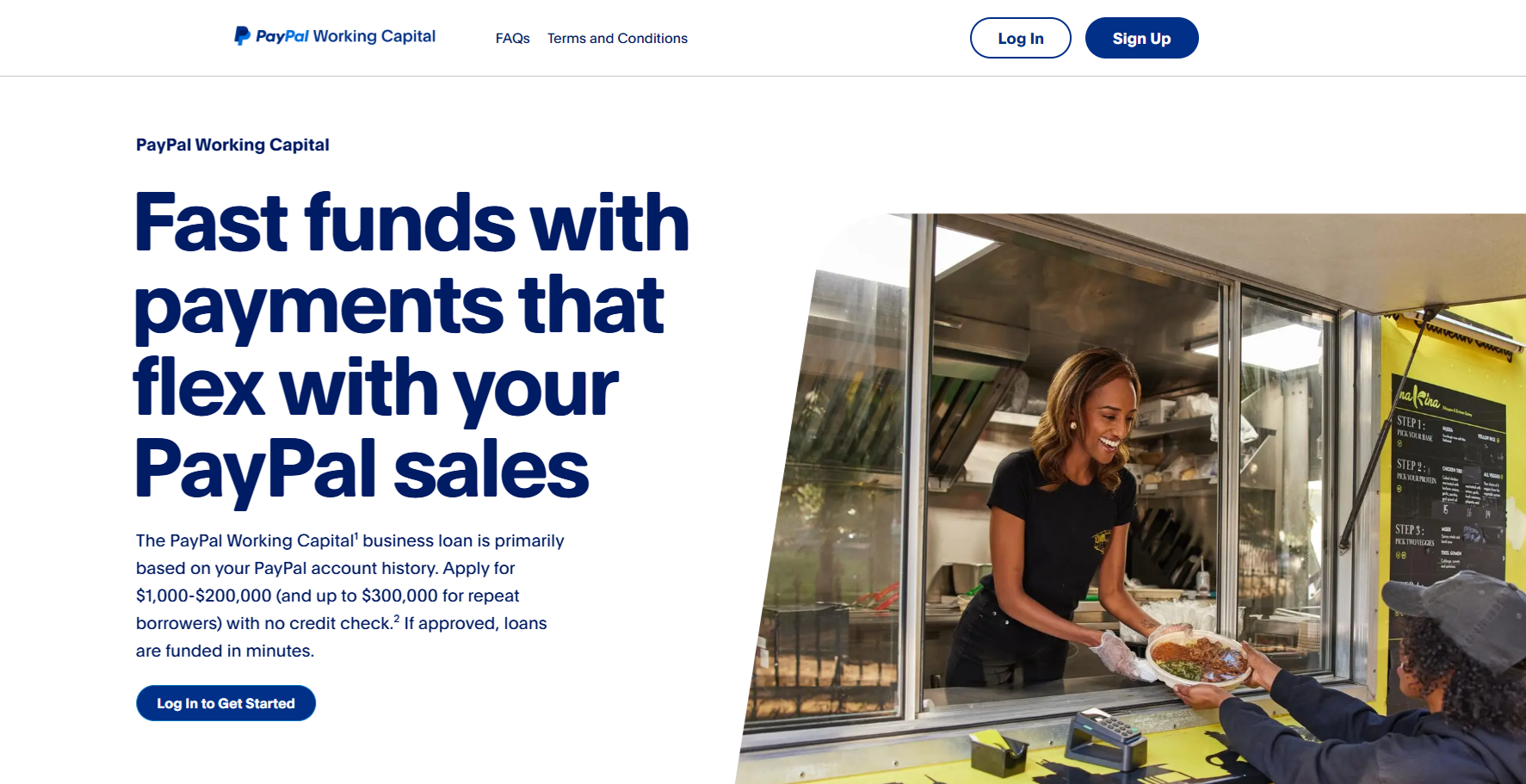
PayPal Working Capital is a short-term loan designed for PayPal merchants. It provides fast access to funds with no credit checks or lengthy applications. Instead of traditional interest, PayPal applies a flat fee, and repayments are deducted automatically as a percentage of your daily PayPal sales. This means you only pay when your business generates revenue, helping you manage cash flow more effectively.
Key Features:
- Sales-Based Repayment: A percentage of daily PayPal sales is deducted to repay the loan.
- No Credit Check: Loan eligibility is based solely on PayPal sales performance.
- Flat Fee Structure: The total repayment amount, including the fee, is disclosed upfront.
- Loan Size: Borrow up to 35% of your annual PayPal sales, with a cap of $300,000 on subsequent loans.
PayPal Working Capital works best for businesses with steady PayPal sales that want quick, flexible financing without the need for personal credit checks.
What is Shopify Capital?
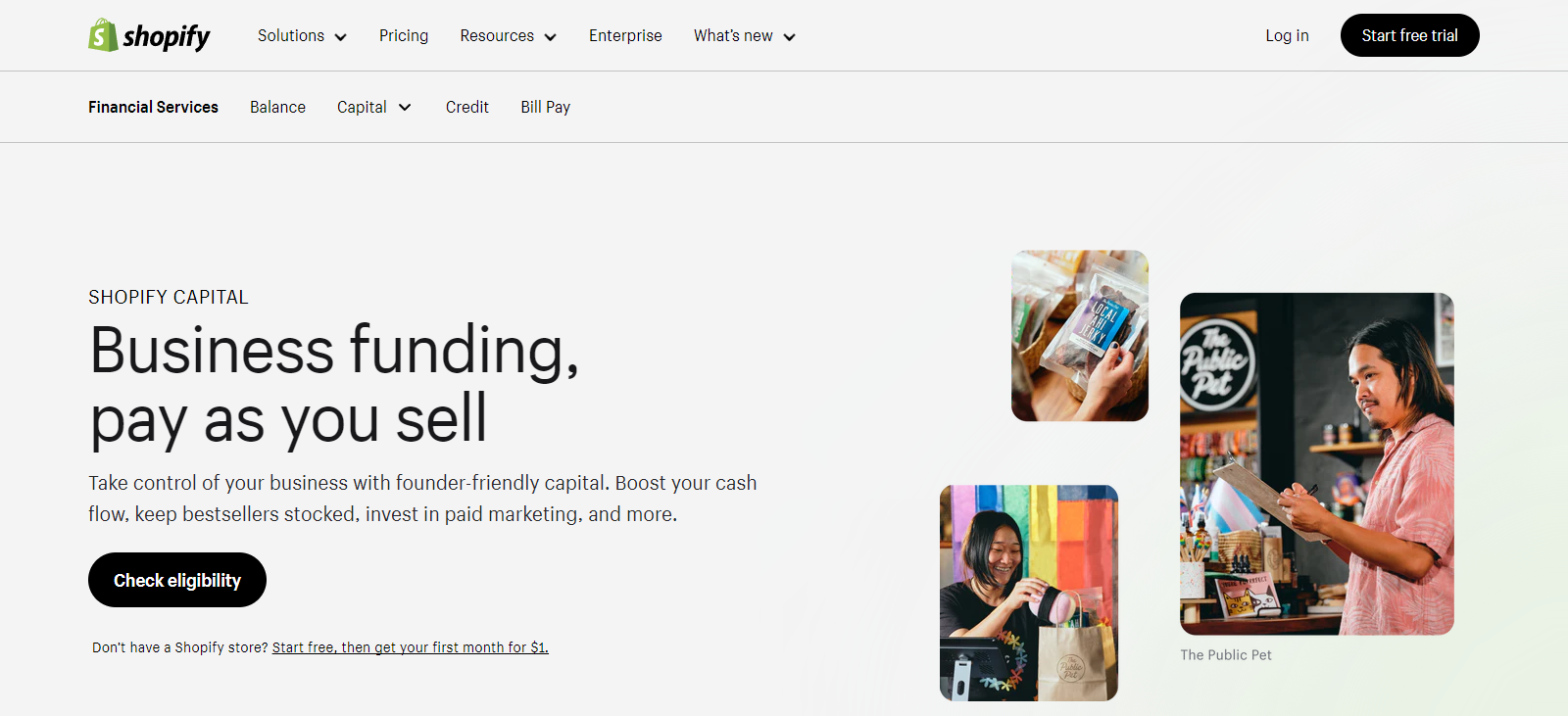
Shopify Capital offers both merchant cash advances and short-term loans to qualified Shopify merchants. The platform provides fast funding to help businesses cover inventory, marketing, and operational costs. Shopify pre-qualifies merchants based on store performance, with offers appearing directly in the Shopify dashboard.
Unlike PayPal Working Capital, Shopify Capital gives merchants the option of two repayment models:
- Merchant Cash Advance: Repayment is tied to a percentage of daily sales.
- Short-Term Loan: Repayment is made through fixed daily or weekly installments, regardless of sales performance.
Key Features:
- Loan Size: Ranges from $200 to $1 million, based on Shopify sales and account health.
- Fast Funding: Funds are typically available within 1–3 business days after acceptance.
- No Credit Check: Like PayPal, eligibility is based on platform performance rather than personal credit history.
Shopify Capital is ideal for merchants operating on the Shopify platform who want larger loan amounts and prefer flexibility in choosing repayment methods.
Eligibility Criteria: PayPal vs. Shopify Capital
Both PayPal Working Capital and Shopify Capital rely on platform-specific eligibility requirements, which makes them easier to access than traditional loans. However, they cater to different types of businesses.
PayPal Working Capital
- Business Account Requirement: Only available to PayPal business or premier account holders.
- Sales Threshold: Minimum annual PayPal sales of $15,000 for business accounts or $20,000 for premier accounts.
- Account History: Your account must have at least 3 months of sales history.
- Good Standing: No recent chargebacks or disputes that might impact eligibility.
Shopify Capital
- Shopify Store Requirement: Only available to Shopify merchants with strong platform performance.
- Pre-Qualification: Offers are made based on sales volume, order history, and account health—merchants cannot apply directly.
- No Sales Thresholds: There’s no fixed minimum, but stores with consistent growth are more likely to qualify.
While both platforms base eligibility on sales performance, PayPal evaluates transaction activity through PayPal, while Shopify assesses your store’s performance metrics on its platform.
Loan Types and Amounts Comparison
Both PayPal Working Capital and Shopify Capital offer flexible funding solutions, but their loan types and amounts differ significantly based on how the platforms assess business performance.
PayPal Working Capital
- Loan Types: Offers short-term loans, with loan sizes tied to annual PayPal sales.
- Loan Amounts: Merchants can borrow up to 35% of their annual PayPal revenue, with the first loan capped at $150,000 and subsequent loans at $300,000.
Shopify Capital
- Loan Types: Provides two options—merchant cash advances and short-term loans.
- Loan Amounts: Ranges from $200 to $1 million, depending on the store’s sales performance and account health.
Verdict:
Shopify Capital offers larger loan amounts, making it more suitable for businesses with higher revenue and long-term projects. On the other hand, PayPal Working Capital is better for smaller, short-term needs, such as inventory purchases or marketing campaigns.
Repayment Structures Compared
The repayment models of PayPal and Shopify differ in their flexibility, with both platforms aiming to align repayments with sales volume.
PayPal Working Capital
- Sales-Based Repayment: A percentage of daily PayPal sales (typically 10-30%) is deducted until the loan is fully repaid.
- No Fixed Repayment Term: The loan is repaid gradually based on sales, ensuring merchants are only paying when they generate revenue.
- Minimum Repayment: Merchants must repay at least 10% of the loan every 90 days.
Shopify Capital
- Merchant Cash Advance: Repayment is made through a percentage of daily sales, similar to PayPal’s model.
- Short-Term Loan: Requires fixed daily or weekly payments, regardless of sales. This option provides predictability but can strain cash flow during slow periods.
Verdict:
PayPal’s purely sales-based repayment offers more flexibility, while Shopify’s loan structure gives merchants more control through fixed payments. Shopify’s mixed repayment models suit businesses with stable cash flow, while PayPal works better for those with seasonal or fluctuating income.
Fees and Costs: PayPal vs. Shopify Capital
Both PayPal Working Capital and Shopify Capital use flat fees rather than interest rates, providing transparent repayment costs upfront. However, the total cost of each loan depends on the repayment structure chosen by the merchant.
PayPal Working Capital
- Flat Fee Model: PayPal charges a one-time fee based on the loan amount, repayment percentage, and sales volume.
- Lower Fees with Higher Repayment Percentages: Selecting a higher repayment percentage results in lower total fees, as the loan is paid off faster.
Shopify Capital
- Fixed Fees: Shopify applies a flat fee to both loans and merchant cash advances.
- No Interest or Hidden Charges: Similar to PayPal, merchants know the full repayment amount upfront.
- Cost Variability: Shopify cash advances may have higher fees than short-term loans due to their sales-based repayment model.
Verdict:
Both platforms offer transparent fees, but PayPal provides more flexibility since the merchant can adjust the repayment percentage. Shopify’s short-term loans may be more affordable for merchants with stable cash flow, as fixed repayments reduce the total fee.
Application and Approval Process
Both PayPal Working Capital and Shopify Capital provide fast, hassle-free approval processes designed to minimize disruptions to business operations. However, there are a few key differences in how the offers are generated and when merchants can access funds.
PayPal Working Capital
- Pre-Qualification: Merchants are automatically assessed based on their PayPal sales. If eligible, a loan offer appears in the PayPal dashboard.
- Approval Time: Offers are often approved within minutes, with funds deposited into the merchant’s PayPal account within a few hours.
- Application Process: No paperwork or credit check is required—everything happens through the PayPal platform.
Shopify Capital
- Pre-Qualified Offers: Shopify reviews store performance metrics and pre-qualifies merchants. Offers appear directly in the Shopify dashboard.
- Approval Time: After the merchant accepts the offer, funds are disbursed within 1–3 business days.
- Application Process: Like PayPal, Shopify does not require formal applications or personal credit checks, streamlining the approval process.
Verdict:
Both platforms offer fast approval and funding, but PayPal Working Capital provides almost instant access to funds, making it ideal for merchants needing cash quickly. Shopify Capital’s 1–3 day funding timeline suits businesses planning for larger investments that don’t require immediate access.

Flexibility and Cash Flow Impact
Both PayPal Working Capital and Shopify Capital are designed to minimize cash flow disruptions by aligning repayment with sales. However, the degree of flexibility each platform offers varies based on repayment models and the structure of the loan.
PayPal Working Capital
PayPal’s repayment model is purely sales-based, meaning merchants only repay when they make sales. This ensures businesses aren’t burdened by fixed payments during slow periods. If sales slow down, the daily repayment amount automatically decreases, protecting cash flow.
However, there’s a minimum repayment requirement—10% of the loan must be repaid every 90 days—which can still put pressure on merchants during extended slow periods.
Shopify Capital
Shopify offers two repayment options, giving merchants more control over how repayments impact their cash flow:
- Merchant Cash Advances: Repayment adjusts with daily sales, similar to PayPal’s model, offering flexibility.
- Short-Term Loans: Fixed daily or weekly repayments provide predictability but can strain cash flow if sales decline unexpectedly.
Verdict:
PayPal Working Capital offers greater flexibility for businesses with seasonal or inconsistent sales, while Shopify Capital provides a blend of predictability and flexibility through its multiple repayment options.
Which Platform Offers Better Value?
The better financing option depends on your business platform, cash flow patterns, and funding needs. Both PayPal Working Capital and Shopify Capital offer quick, transparent funding, but the value each provides depends on how well it aligns with your business operations.
- When to Choose PayPal Working Capital:
- If your business relies heavily on PayPal transactions.
- If you prefer sales-based repayment with no fixed deadlines.
- If you need smaller, short-term loans to cover operational expenses.
- When to Choose Shopify Capital:
- If your business is built around Shopify’s platform and needs larger loans.
- If you want the option of fixed repayment schedules.
- If your business requires long-term investments or expansion funding.
Both platforms offer good value, but your choice should be based on the sales channel you rely on and how you prefer to manage repayments.
Success Stories from Both Platforms
Businesses across industries have used PayPal Working Capital and Shopify Capital to grow their operations. Here are a few real-world examples that highlight how each platform works in practice:
PayPal Working Capital Success
A handmade jewelry business with fluctuating seasonal sales used PayPal Working Capital to replenish inventory ahead of the holiday season. The sales-based repayment model ensured that payments only increased during peak sales periods, allowing the business to maintain cash flow and expand product offerings.
Shopify Capital Success
A clothing brand on Shopify needed additional funds to launch a new collection and run targeted marketing campaigns. The merchant opted for a short-term loan with fixed daily payments, which provided the stability needed to manage their budget while growing revenue. Thanks to the campaign, the brand saw a 25% increase in sales within three months and paid off the loan early without penalties.
These examples demonstrate how choosing the right financing option can support growth when aligned with your business’s cash flow and operational needs.

Limitations and Challenges Compared
While both PayPal Working Capital and Shopify Capital offer fast and accessible funding, each platform has limitations that merchants should consider.
PayPal Working Capital Challenges
- Limited Access: Available only to businesses with active PayPal sales, making it unsuitable for those using other payment processors.
- Single Active Loan: Merchants must repay their current loan in full before applying for another, which can restrict access to additional capital during periods of rapid growth.
- Higher Fees: The flat fee can result in higher costs than traditional bank loans.
Shopify Capital Challenges
- Platform Restriction: Only available to Shopify merchants, limiting access for businesses that sell through other platforms.
- Mixed Repayment Models: While cash advances offer flexibility, fixed daily or weekly repayments may cause cash flow stress during slow periods.
- Pre-Qualification Only: Merchants can’t apply directly; they must wait to be pre-qualified by Shopify.
Verdict:
Both platforms come with trade-offs. PayPal is ideal for quick, small loans, while Shopify offers more significant funding options but with stricter access requirements.
How to Choose Between PayPal Working Capital and Shopify Capital
Choosing the right financing option depends on several factors, including which platform you use, your cash flow patterns, and your business’s financial needs. Here are some key considerations to help you decide.
Choose PayPal Working Capital if:
- Your business processes most transactions through PayPal and relies heavily on it for sales.
- Flexible repayment based on daily sales is a priority, especially if your revenue fluctuates seasonally.
- You need smaller, short-term loans to cover immediate expenses like inventory or marketing.
- You value instant access to funds, with loans available within hours.
Choose Shopify Capital if:
- You run your store on Shopify and need to finance large, long-term investments.
- You want the option of fixed repayments for predictable cash flow management.
- You’re looking for larger loan amounts, up to $1 million, to fund major expansions or new product launches.
- You prefer a platform-integrated funding solution that aligns with your Shopify business operations.
Each platform offers unique benefits. The best choice depends on whether you prioritize flexibility or predictability, as well as the primary platform your business operates on.
Conclusion
PayPal Working Capital and Shopify Capital are both excellent financing options for e-commerce businesses looking for quick access to capital. Each service offers platform-specific advantages that align with different business needs.
If your business relies on PayPal for payment processing, PayPal Working Capital offers a convenient way to access funds with sales-based repayments and no fixed terms. On the other hand, Shopify Capital provides more flexibility with both merchant cash advances and short-term loans, making it ideal for Shopify-based merchants with predictable cash flow.
Ultimately, the right financing option depends on how your business operates, how much capital you need, and your preferred repayment method. Both platforms offer fast, transparent funding to help businesses grow without the complexity of traditional loans.
Frequently Asked Questions (FAQs)
1. Can I use both PayPal Working Capital and Shopify Capital?
Yes, but you need to qualify independently on each platform. Each loan operates separately based on performance metrics within its respective platform.
2. Which platform offers larger loan amounts?
Shopify Capital offers loans up to $1 million, while PayPal Working Capital loans max out at $300,000.
3. How quickly can I access funds?
PayPal Working Capital funds are typically available within a few hours. Shopify Capital funds take 1–3 business days to be deposited after approval.
4. Are there penalties for early repayment?
No, both PayPal Working Capital and Shopify Capital allow early repayment with no penalties. However, the flat fee remains the same regardless of when you repay.
5. Which option is better for seasonal businesses?
PayPal Working Capital offers greater flexibility for seasonal businesses, as repayments adjust with daily sales. Shopify Capital’s fixed loan repayments may cause cash flow challenges during slow periods.