

Working from home can make eating well harder than it looks. This guide explores practical work-from-home food strategies, including filling lunches, smarter snacks, make-ahead meal ideas, and easy cleanup habits that help remote workers stay productive, energized, and on track throughout the day.
Key Takeaways
- Working from home often leads to poor eating habits because of constant kitchen access, decision fatigue, and interrupted schedules.
- The best workday meals are quick, filling, easy to repeat, and simple to clean up.
- Protein-rich lunches can help remote workers stay fuller longer and avoid afternoon energy crashes.
- Snacks should help bridge the gap between meals, not become mindless all-day grazing.
- Light make-ahead prep can reduce friction and make it easier to choose better meals during busy workdays.
- A small rotation of dependable meals often works better than trying to create something different every day.
Working from home sounds convenient until your food habits start working against you. When your kitchen is only a few steps away, it becomes easy to skip a proper lunch, snack mindlessly, or rely on whatever is fastest instead of what will actually help you stay productive. Over time, that kind of routine can leave you distracted, low on energy, and struggling to maintain focus throughout the day.
The challenge is that remote work creates a unique food environment. You are close enough to your refrigerator to graze constantly, but often too busy to prepare something thoughtful. Meetings, deadlines, and daily responsibilities turn even simple meal decisions into one more source of friction. As the food experts at Gourmade emphasize, the solution is not complicated meal prep or unrealistic routines—it is building a small, reliable rotation of meals that are quick, satisfying, and easy to keep on hand.
According to the Centers for Disease Control and Prevention, healthy eating supports overall health across the lifespan. That sounds broad, but the day-to-day version is simple: meals with enough protein, fiber, and staying power usually make the workday easier than a random collection of snack foods and caffeine.
A well-structured work-from-home food routine can make a meaningful difference in how your day unfolds. The right meals and snacks help stabilize energy, reduce decision fatigue, and prevent the cycle of random snacking and mid-afternoon crashes. In this guide, we will break down practical strategies to help you eat better while working from home—without adding stress, time pressure, or unnecessary cleanup.
Table of Contents
Why Work-From-Home Eating Goes Off the Rails So Easily
Office life has plenty of food problems, but remote work introduces its own weird little traps.
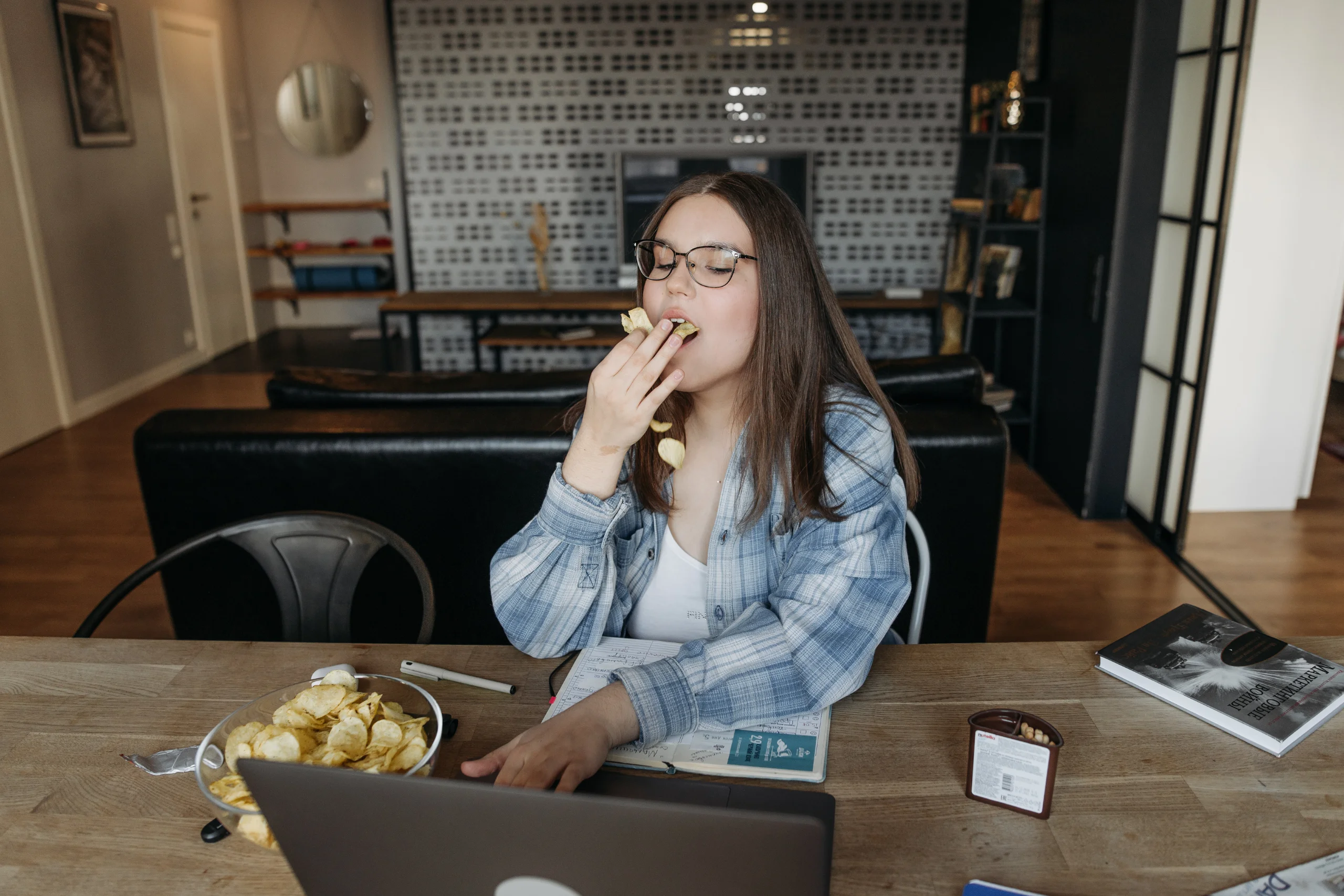
The first is constant access. At home, the kitchen is always nearby. That sounds convenient until you realize how often proximity turns into low-quality snacking. It is easy to grab something quick because it is there, not because it will actually help.
The second issue is decision fatigue. By the time lunch rolls around, many people have already made dozens of work decisions. That makes even a simple food choice feel more annoying than it should. When that happens, convenience usually wins over quality.
The third problem is interruption. A lunch that takes too long or creates too much mess feels expensive when your workday is chopped into meetings and deadlines. If eating well requires perfect timing and a sparkling clean kitchen, it is probably not going to happen consistently.
What Workday Meals Actually Need to Do
A useful work-from-home meal has a job to do.
It should be quick enough that it does not blow up your schedule, satisfying enough that you are not raiding the pantry an hour later, and simple enough that cleanup does not become its own separate project. That usually means focusing on a few practical traits.
1. It should have staying power
Meals that disappear from your system in thirty minutes are not helping. A decent lunch usually needs protein, some fat, and enough fiber or bulk to keep you full.
2. It should be easy to repeat
A meal does not have to be exciting every single time, but it does need to be realistic enough that you will make it again. If it only works when you have an unusually open afternoon, it is not really a workday strategy.
3. It should not create a cleanup tax
A sink full of pans at 1:15 p.m. is a great way to make future-you resent present-you. Meals with fewer dishes, reusable components, and straightforward prep tend to survive real life much better.
Protein Does More Heavy Lifting Than People Think
A high-protein lunch is one of the easiest ways to make the second half of the workday less annoying.
That does not mean every lunch has to be chicken breast and moral superiority. It just means your meal should have enough substance to hold you over. Protein is often the difference between “I had lunch” and “I ate something and now I want crackers, chocolate, and a nap.”
For many people, the easiest version looks like leftover chicken, a hearty egg-based meal, Greek yogurt with smart add-ins, or a protein-centered grain bowl. If you already have cooked protein in the fridge, the rest of lunch gets much easier. You are not building a meal from scratch. You are assembling one.
This is one reason batch-cooking a few versatile proteins helps so much. Cook once, use it in several different ways, and the whole week gets less dramatic.
Snacks Should Bridge the Gap, Not Blow Up Your Appetite
Most work-from-home snacking fails in one of two ways.
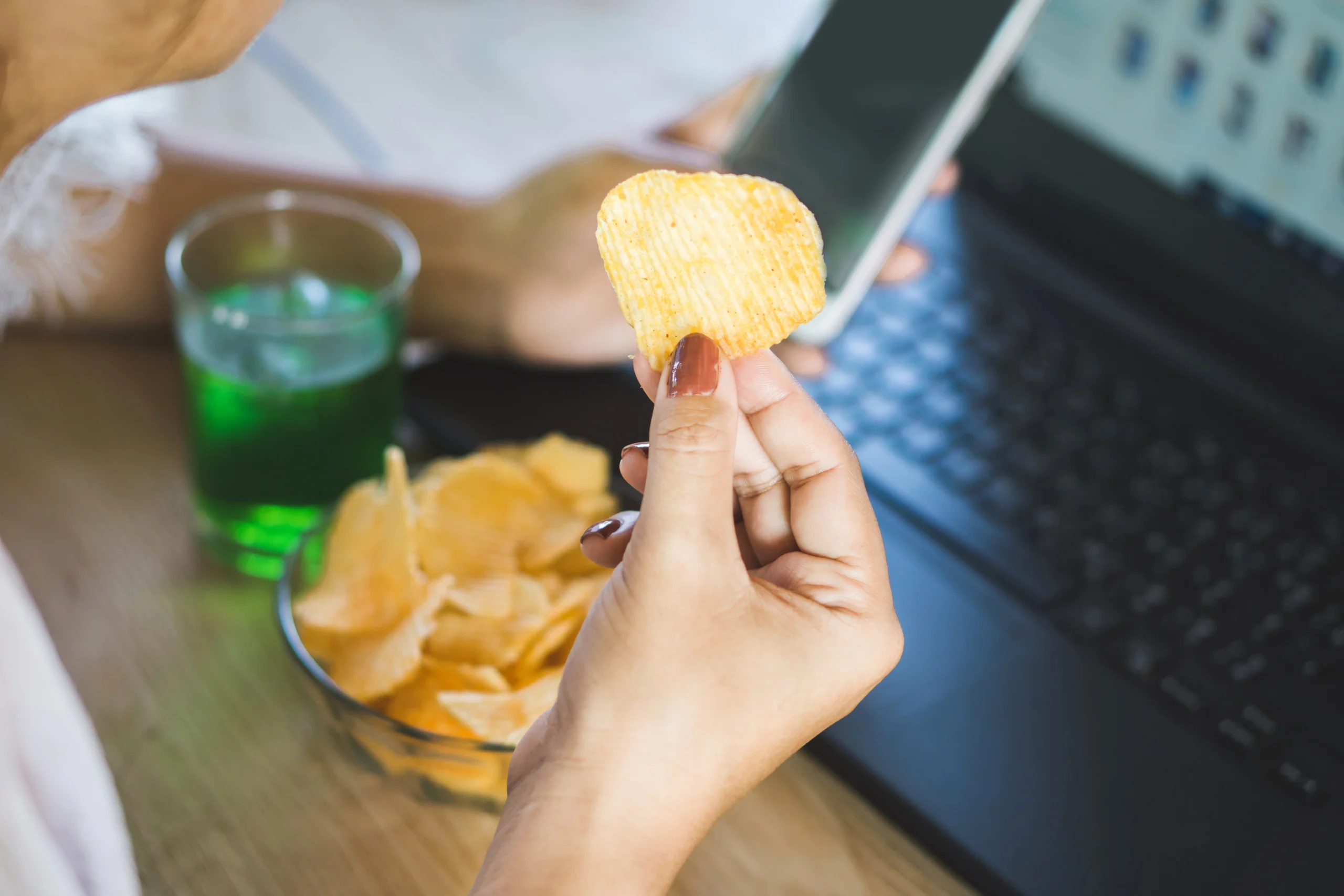
Either the snack is so light it buys you fifteen useless minutes, or it is so mindless that it becomes a second lunch you barely notice eating. Neither is ideal.
A better snack usually has structure. Think something crunchy with protein, fruit paired with a more substantial side, yogurt, cheese, nuts, or a pantry-friendly roasted snack that is easy to portion. Good snacks should calm the situation down. They should not create a bigger one.
This matters even more for people working long blocks without a true lunch hour. In those cases, smarter snacks can act as damage control until you can eat a full meal.
Make-Ahead Food Is About Reducing Friction
The best workday meals often start before the workday does.
That does not mean you need an all-day Sunday prep marathon. In fact, those often fail because they ask too much up front. A more useful approach is making one or two high-value items ahead of time.
That could be:
- a cooked protein you can use three different ways
- a salad that keeps well
- a pot of soup or stew that reheats cleanly
- a casserole that holds its texture
- a dressing or sauce that makes simple food less boring
- a tray of roasted vegetables you can reuse across meals
The goal is not perfection. It is reducing the number of decisions you have to make when you are busy. If lunch is halfway done before you even start, you are much more likely to eat something decent.
Easy Cleanup Is Not a Bonus. It Is Part of the Strategy.
People love to talk about healthy eating like it lives entirely in ingredients and willpower. In real life, dishes matter.
If a meal leaves your kitchen looking like you hosted a cooking competition during your lunch break, that meal is going to lose points fast. Cleanup affects whether a food routine is sustainable. It influences what you choose next time.
That is why sheet pan meals, one-pan dinners, sturdy leftovers, and cold or room-temperature lunches work so well for remote workers. They reduce both active cooking time and cleanup drag. That makes consistency much easier.
A Small Rotation Beats Endless Variety
One underrated solution to work-from-home food stress is repetition.
Not miserable repetition. Strategic repetition.
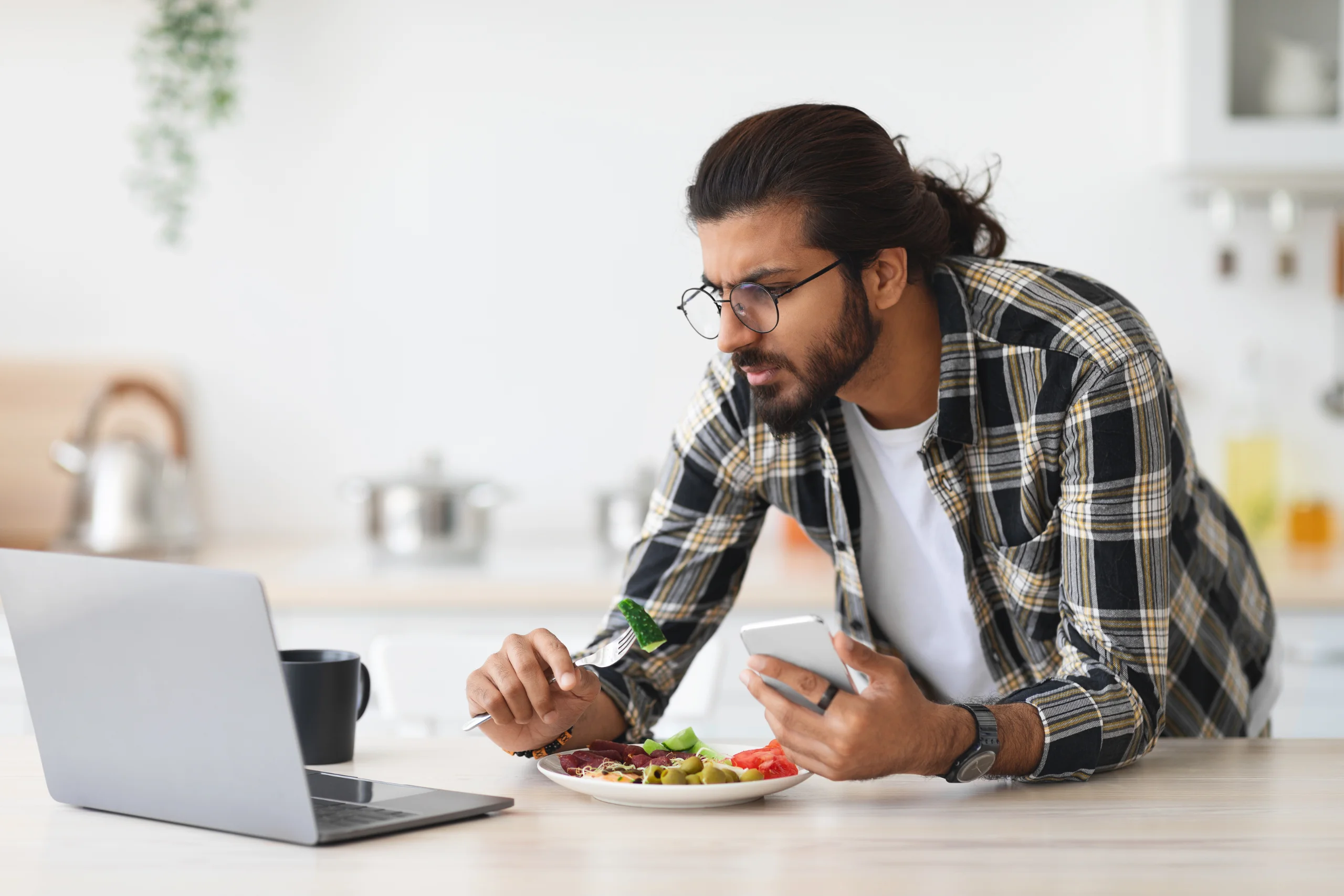
Most people do not need a brand new lunch every day. They need a handful of solid options that cover different moods and time constraints. Maybe one is a high-protein bowl, one is leftovers from dinner, one is a snack plate with enough substance to count as lunch, and one is a make-ahead dish that reheats well. That is already enough to make the week feel more manageable.
When you stop expecting novelty at every meal, it becomes much easier to keep better food in rotation.
FAQ
What is the best type of lunch for working from home?
The best lunch is one that is easy to make, filling enough to carry you through the afternoon, and simple enough that cleanup does not become a problem. For many people, that means a protein-centered meal with some fiber and enough flavor to feel satisfying.
How can remote workers avoid snacking all day?
Start with meals that are more substantial. Constant snacking is often a sign that lunch was too light or too random. It also helps to keep better snack options visible and portionable instead of eating directly from large packages.
Is meal prep necessary for working from home?
Not in the extreme version people often picture. You do not need a full week of pre-packed containers to benefit from preparation. Even one cooked protein, one reusable side, or one make-ahead lunch option can make the week easier.
Why does cleanup matter so much in a work-from-home food routine?
Because friction changes behavior. If your meals create a big mess, you are less likely to repeat them on a busy day. Easy cleanup is not just a convenience issue. It is part of what makes a routine sustainable.
How many meals should be in a good work-from-home rotation?
Usually fewer than people think. Three to five dependable lunches or lunch-building components can cover most weeks without making food feel repetitive in a bad way.
Final Thought
Eating well while working from home is less about discipline and more about setup.
Once you keep a few satisfying, practical options in rotation, the workday gets easier. You spend less time scrambling, less money on impulse food, and a lot less energy recovering from weak meal choices.
