
A home-based sewing business can be one of the most practical ways to turn a useful skill into income. You do not need a commercial studio, industrial equipment, or a large inventory before accepting your first order. Many sewing entrepreneurs begin with a machine they already own, a small work area, and a focused service that solves a clear problem for local or online customers.
The key is to start with the right business model. A lean startup approach helps you avoid buying specialized machines, large quantities of fabric, or expensive branding before you know what customers will pay for. This principle is especially important when you are trying to start a small business with limited capital. Test demand first, control expenses, and reinvest only after sales begin to justify additional purchases.
This guide explains how to choose a profitable niche, validate demand, build a realistic startup budget, organize your workspace, handle basic legal and financial responsibilities, price your work, attract customers, and grow without creating unnecessary financial pressure. It complements PowerHomeBiz resources on starting a home sewing business and how to start a craft business, while focusing specifically on a low-cost, home-based launch.
Key Takeaways
- Begin with one or two services that match your strongest sewing skills and have visible customer demand.
- Use equipment you already own whenever it can produce reliable, professional-quality work.
- Validate demand with conversations, sample listings, and small paid orders before investing heavily.
- Price every job to cover materials, labor, overhead, risk, and profit – not materials alone.
- Set clear policies for deposits, fittings, revisions, deadlines, and customer-supplied materials.
- Keep business finances and records organized from the beginning, even when sales are small.
- Grow by reinvesting in the specific equipment or marketing activity that removes a proven bottleneck.
Table of Contents

Home-Based Sewing Business at a Glance
| Business model | Best for | Main advantage | Main caution |
| Alterations and repairs | Local customers | Repeat demand and low material cost | Deadlines and accurate fitting matter |
| Custom home decor | Online or local product sales | Easy to show in photos and offer in collections | Fabric inventory can tie up cash |
| Uniform and workwear services | Schools, teams, and employers | Potential for repeat and batch orders | Seasonal peaks can be intense |
| Specialty garments | Customers with specific needs | Higher prices for specialized skill | More fittings and design risk |
| Small sewn accessories | Markets and ecommerce | Simple products can be batched | Competition can pressure margins |
1. Decide What Kind of Sewing Business You Want
A sewing business can operate as a local service, a product business, or a combination of both. The best choice depends on your skill level, available time, workspace, equipment, and the customers you can realistically reach.
Service work includes alterations, repairs, hemming, zipper replacement, mending, uniform adjustments, and custom fitting. It usually requires little inventory because customers often bring the garment. A service model may be the fastest route to revenue, but it also requires dependable scheduling, communication, and turnaround times. PowerHomeBiz offers a broader guide to building a successful service business if most of your income will come from client work.
A product-based sewing business sells finished items such as pillows, aprons, tote bags, pet accessories, costumes, reusable household goods, or limited clothing collections. Products can be made to order or produced in small batches. This model can reach customers beyond your local area, but it requires careful control of inventory, sizing, packaging, shipping, and returns.
A hybrid model can provide balance. For example, alterations may create predictable local cash flow while custom home decor or specialty accessories provide higher-margin product sales. Keep the first version simple. Adding too many unrelated offers makes purchasing, scheduling, pricing, and marketing harder than necessary.
2. Choose a Profitable Niche
Do not make the mistake of trying to offer every sewing service. Instead, choose one or two services that match your skills and appear consistently in customer requests. A niche makes your marketing clearer and reduces the number of fabrics, patterns, presser feet, notions, and specialty tools you must keep on hand.
Low-cost niches may include:
- Clothing alterations, hemming, mending, and repair
- Custom pillows, cushions, table linens, and simple home decor
- School uniform tailoring, patches, and name labeling
- Pet beds, bandanas, crate covers, and washable accessories
- Aprons, tote bags, fabric organizers, and reusable household items
- Simple custom garments for customers who need specific sizing
- Costumes and performance wear for dance, theater, cosplay, or sports
The most attractive niche is not always the trendiest one. It is the niche where demand, skill, pricing, and production time work together. A complicated garment may sell for more but generate a lower hourly profit if it requires repeated fittings and revisions. A simple alteration may look less exciting but produce reliable income with minimal material cost.
Specialized markets can also reward expertise. For example, PowerHomeBiz has examined the opportunity to build a sewing business for the figure skating market. Similar specialization is possible in dancewear, adaptive clothing, bridal alterations, historical costumes, modest fashion, uniforms, and home organization products.
3. Validate Demand Before You Spend
A realistic budget begins with market validation, not shopping. Before buying new equipment or fabric, confirm that real customers need the service and are willing to pay enough to support it. The U.S. Small Business Administration explains that market research and competitive analysis help entrepreneurs identify customers and determine how a business can stand out.
Practical ways to validate a sewing business include:
• Ask local parents, professionals, performers, boutique owners, or community groups what sewing services are difficult to find.
• Review local search results, marketplace listings, and social media groups to see what customers request and how quickly providers respond.
• Compare competitor pricing, turnaround times, reviews, service areas, and minimum order policies.
• Create three to five strong samples and show them to potential buyers before producing inventory.
• Offer a limited paid pilot rather than giving away extensive custom work for free.
• Track which inquiries become paid orders and which requests repeatedly fail to meet your minimum price.
Validation should answer four questions: Who is the customer? What problem do they need solved? What result do they value? What price and turnaround time will they accept? You do not need a long formal report, but you should record what you learn so that purchasing and marketing decisions are based on evidence rather than assumptions.
4. Create a Lean Business Plan and Startup Budget
A business plan does not need to be dozens of pages. A one-page plan can define your target customer, core offer, sales channels, pricing approach, monthly capacity, expenses, and goals. The SBA provides guidance on how to write your business plan, including a lean startup format for businesses that need a concise operating roadmap.
Your budget should separate essential startup costs from upgrades that can wait. The following ranges are illustrative planning estimates, not fixed prices. Your actual cost will depend on what you already own, the type of work you accept, and local registration requirements.
| Expense | Lean approach | Illustrative planning range |
| Sewing machine | Use a dependable machine you own or buy a serviced entry-level/refurbished model | $0-$600 |
| Hand tools and measuring supplies | Buy only the scissors, rulers, needles, pins, marking tools, and seam tools required | $50-$175 |
| Pressing equipment | Use an existing iron and board before purchasing a professional pressing station | $0-$150 |
| Initial fabric and notions | Stock only common supplies; require deposits for unusual materials | $75-$350 |
| Workspace and storage | Repurpose a table, shelving, bins, and lighting where safe | $0-$250 |
| Registration, permits, and insurance | Varies substantially by location and business structure | $0-$500+ |
| Marketing and packaging | Start with samples, basic photography, simple packaging, and local listings | $25-$200 |
| Budget principle: Do not spend the entire amount simply because it appears in your plan. Treat each purchase as a decision that must improve quality, capacity, safety, or sales. |
5. Buy Only the Equipment You Need
You do not need the most expensive sewing machine to begin. For many alterations, repairs, accessories, and home decor projects, a dependable machine with straight stitch, zigzag, buttonhole capability, adjustable stitch length, and readily available replacement parts may be enough.
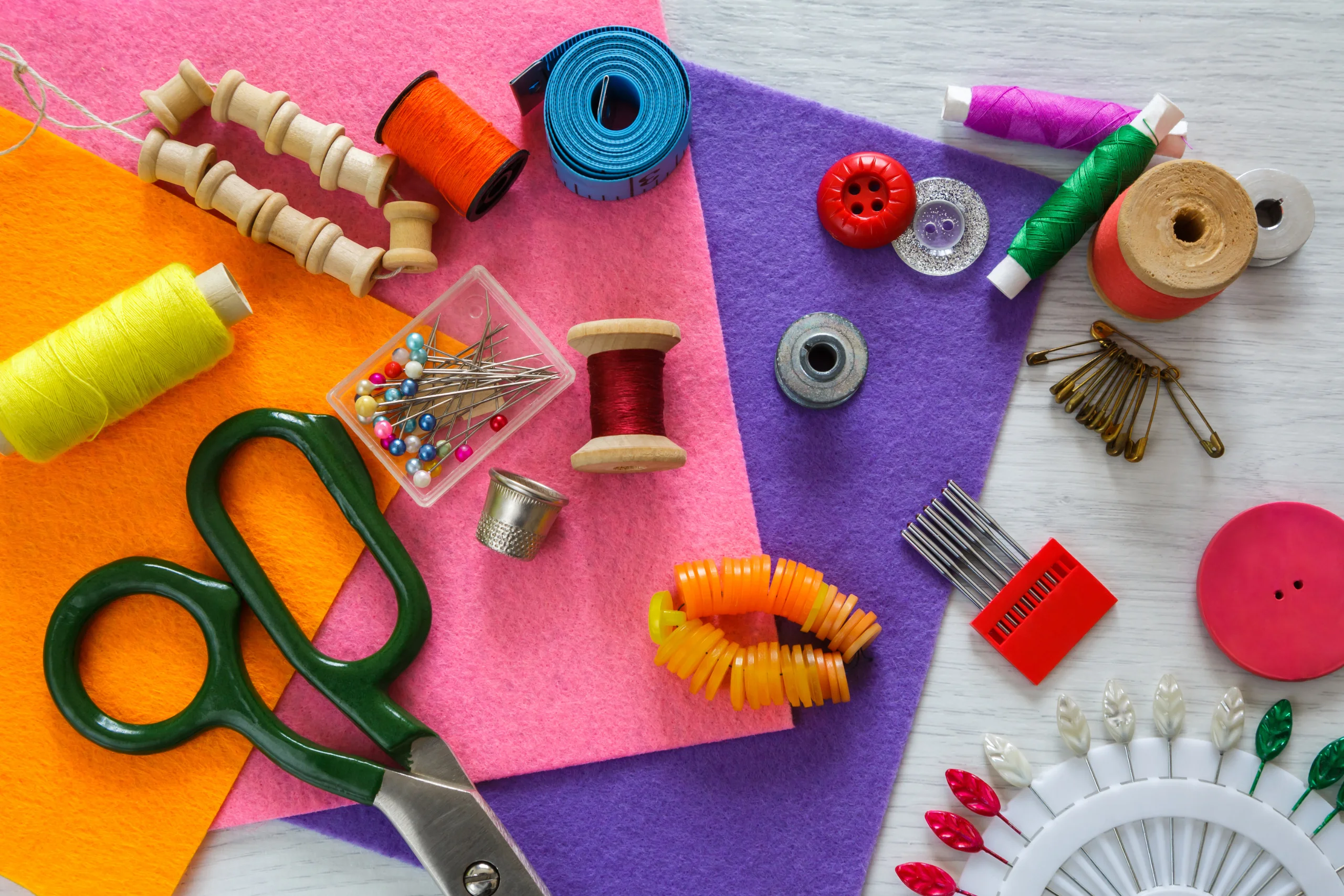
A practical starter kit may include:
• A reliable sewing machine suited to the materials you plan to use
• Fabric scissors and separate paper scissors
• Measuring tape, seam gauge, rulers, and marking tools
• Pins, clips, hand-sewing needles, and machine needles in appropriate sizes
• Seam ripper, thread snips, and small repair tools
• Steam iron, pressing cloths, and a stable ironing surface
• Task lighting, surge protection, and safe cord management
• Basic storage for thread, notions, patterns, and active orders
Invest in quality tools where failure would damage fabric, delay an order, or create a safety problem. Purchasing from a reputable sewing machine store is advisable. Staff in such stores can help you identify a machine within your budget that suits the fabrics, stitch types, and volume of work you expect to handle.
Delay specialized purchases until the workload proves the need. A serger may become valuable when you regularly sew stretch fabrics or finish seams in batches. A heavy-duty or industrial machine may be justified when your current machine struggles with denim, canvas, upholstery, or production volume. An embroidery machine is not a necessary startup expense unless embroidery is central to your offer and customers are already requesting it.
Consider used equipment carefully. Ask about service history, test the machine with the materials you plan to sew, confirm that parts and manuals are available, and budget for professional servicing. A low purchase price is not a bargain if the machine creates skipped stitches, tension problems, or repeated downtime.
6. Create a Practical and Safe Home Workspace
You do not need a commercial studio, but your work area should support consistent quality. A spare bedroom, basement, finished garage, or quiet corner can work if it provides enough light, ventilation, electrical capacity, and room to handle fabric safely.
A functional sewing workspace should be:
• Well lit, with focused task lighting near the needle and cutting area
• Comfortable for long sessions, with a supportive chair and appropriate table height
• Organized so frequently used tools are easy to reach
• Large enough for safe cutting, pressing, and movement around equipment
• Separated from pets, food, smoke, moisture, and household traffic that could damage customer items
• Secure enough to protect customer garments, measurements, contact information, and payments
Use furniture you already own when it is stable and safe. A dining table may serve as a temporary cutting surface, although frequent cutting is easier on a higher table that reduces bending. Vertical shelving, clear bins, wall-mounted organizers, and labeled order bags can make a small room operate efficiently.
Create separate zones for intake, cutting, sewing, pressing, finished orders, and supplies. Even in one room, this flow reduces lost pieces and accidental mix-ups. Each customer order should have a label or work ticket showing the customer name, contact details, promised completion date, requested changes, deposit, and balance due.
Running a home-based business also requires household boundaries. Establish working hours, decide whether customers may enter your home, and create a safe pickup process. Some owners use appointment-only fittings, porch pickup, local delivery, or a neutral meeting location when appropriate.
7. Handle Business, Tax, and Product Requirements
Business requirements vary by city, county, state, lease, and homeowners association. Before accepting regular paid work, check whether you need a business registration, assumed-name filing, sales tax account, zoning approval, home occupation permit, or specific insurance. Also confirm whether customer visits, signage, inventory, or deliveries are restricted at your address.
Open a separate business bank account when practical and use a consistent method to document income and expenses. The IRS explains that good business recordkeeping helps owners monitor progress, prepare financial statements, identify income, track deductible expenses, and support tax returns.
If you manufacture clothing or textile products for sale, review applicable labeling rules. The Federal Trade Commission states that most textile and wool products must identify fiber content, country of origin, and the manufacturer or another responsible business, while clothing may also be subject to care-label requirements. Review the FTC guide to clothing and textile labeling and obtain professional advice for your specific products.
Take additional care with products intended primarily for children. The Consumer Product Safety Commission explains that certain children’s products can be subject to testing, certification, tracking-label, and other safety requirements. Consult the CPSC overview of children’s products before selling baby accessories, toys, sleep products, or other items intended for children.
| Important: This article provides general business information, not legal, tax, or product-compliance advice. Requirements depend on your location, product, customer, and business structure. |
8. Charge the Right Price
Many beginners undercharge because they calculate fabric and thread but ignore labor, consultation time, fittings, equipment wear, utilities, payment fees, travel, packaging, and revisions. A price that covers materials but not your time is not sustainable.
Before quoting a job, calculate:
• Materials, including waste and replacement risk
• Thread, zippers, buttons, elastic, interfacing, trims, and other notions
• Direct labor time for measuring, cutting, sewing, pressing, fittings, and finishing
• Administrative time for messages, estimates, purchasing, invoicing, and pickup
• Overhead such as utilities, machine servicing, software, insurance, and workspace costs
• Payment processing, marketplace, packaging, or shipping fees
• A profit margin that supports reinvestment and compensates you for business risk
A simple pricing formula is: materials + labor + overhead allocation + profit. Suppose an item uses $18 in materials, requires two hours of direct work at a $25 labor rate, and carries $8 in overhead and transaction costs. The cost before profit is $76. The final price must then include a reasonable profit amount and any allowance for design complexity or revision risk. The exact figures are yours to determine, but the calculation should be deliberate.
Set minimum charges for small jobs because intake, communication, setup, and payment take time even when the actual sewing takes only a few minutes. Charge rush fees for work that disrupts your schedule. Require deposits for custom orders, unusual materials, or large projects. For more pricing ideas, review these PowerHomeBiz pricing tips for small business entrepreneurs.
Create Clear Estimates and Policies
Written policies prevent misunderstandings. Your estimate or order form should describe the work, materials, completion date, price, deposit, balance due, number of included fittings or revisions, and responsibility for customer-supplied fabric. Explain what happens when a customer changes the design, misses a fitting, delays approval, or requests a rush delivery.
For alterations, document the garment’s condition at intake and note existing stains, tears, weak fabric, missing parts, or prior modifications. For custom work, confirm measurements and design choices in writing. Never promise an exact result when the fabric, construction, or previous alterations make the outcome uncertain.
9. Build a Portfolio That Shows Quality
Customers need evidence that you can deliver clean, durable work. Create a small portfolio focused on the niche you want to sell. Five excellent examples are more persuasive than dozens of unrelated or poorly photographed projects.
For each sample, capture:
• A full view that shows the finished item or garment
• Close-ups of stitching, seams, closures, lining, hems, and other quality details
• Before-and-after images for repairs or alterations, with the customer’s permission
• Scale, measurements, fabric information, care instructions, and available options
• A short explanation of the problem solved or customization provided
You can take strong images with a phone when lighting, background, focus, and framing are controlled. PowerHomeBiz provides a product photography equipment checklist for small businesses that need professional-looking images without building an expensive studio.
Do not publish identifiable customer photos, measurements, or private messages without permission. Ask for written approval before using a customer’s garment, home, child, or testimonial in marketing.
10. Find Customers Without Spending Much
Attracting your first customers does not require a large advertising budget. It requires a clear offer, visible proof of your work, and a dependable way for interested people to contact you.
Low-cost marketing tactics include:
• Create a simple Google Business Profile or local business listing when customers are served in a defined area and the listing meets platform rules.
• Show finished projects, close-up craftsmanship, process clips, care tips, and customer-approved transformations on Instagram, Facebook, Pinterest, or TikTok.
• Post in relevant neighborhood, parent, school, theater, dance, cosplay, wedding, or community groups without violating promotional rules.
• Build relationships with dry cleaners, boutiques, bridal shops, dance studios, costume departments, interior designers, and uniform suppliers.
• Attend selected craft fairs or community events only when the audience matches your niche and the fees can be recovered.
• Ask satisfied customers for reviews, referrals, repeat work, and permission to use finished-project photos.
• Create a small email list so past customers hear about seasonal services, booking deadlines, and new products.
A strong social media presence is not measured only by follower count. Track inquiries, estimates, bookings, average order value, repeat customers, and referrals. If a platform produces attention but no qualified orders, change the offer, audience, or content before spending more time there.
Use specific marketing language. “Professional alterations with two-week turnaround” is clearer than “I sew anything.” “Custom washable pet-bed covers made to your dimensions” communicates a result. “School uniform hemming by appointment” tells local parents exactly when to contact you.
PowerHomeBiz also offers practical ways to advertise your small business using reviews, partnerships, referrals, email, and measurable campaigns rather than relying only on paid advertising.
11. Deliver a Professional Customer Experience
Word-of-mouth can become a powerful source of sewing work, but it depends on more than technical skill. Customers remember whether you answered promptly, explained the process, met the promised date, protected their property, and handled problems responsibly.
Create a repeatable customer workflow:
1. Respond to the inquiry and confirm whether the project fits your services.
2. Collect photos, measurements, deadlines, and expectations before estimating.
3. Provide a written estimate and explain the deposit and approval process.
4. Label and store all garments, materials, patterns, and notes together.
5. Send an update when a fitting, decision, or delay requires customer action.
6. Inspect, press, photograph, package, and invoice the completed work.
7. Ask for feedback and permission to request a review after successful delivery.
Avoid overpromising. A realistic delivery date creates more trust than a rushed promise followed by excuses. Build extra time into custom and seasonal projects. When a delay occurs, contact the customer before the deadline, explain the revised plan, and provide options.
Transparency, clear pricing, respectful communication, and reliable follow-through help build customer trust. Trust is especially important when customers are leaving valuable garments, sentimental items, or event clothing in your care.
12. Manage Materials, Time, and Cash Flow
A sewing business can look busy while producing little cash. Material purchases, unbilled revisions, slow pickups, and unfinished orders can consume money and time. Track each project from estimate to payment so you know which services are actually profitable.
Maintain simple records for:
- Sales, deposits, balances, refunds, and payment fees
- Fabric, notions, packaging, shipping, equipment, and repair expenses
- Time spent on production, fitting, communication, shopping, and administration
- Inventory on hand and materials reserved for customer orders
- Outstanding estimates, active jobs, completion dates, and uncollected orders
- Marketing source for each inquiry and customer
Use deposits to fund custom materials rather than paying every project cost from personal funds. Establish a pickup deadline and storage policy for finished orders. Review prices periodically when fabric, shipping, utilities, or payment fees change.
Measure capacity in hours, not just order count. Ten simple hems and ten custom garments are not equivalent. Estimate how many production hours you can provide each week after accounting for family responsibilities, marketing, purchasing, bookkeeping, and maintenance.
13. Grow Gradually and Reinvest With Purpose
Growth should make the business more profitable or easier to operate. Do not expand simply because new equipment, products, or platforms are exciting. Reinvest based on a proven bottleneck.
Examples of purposeful reinvestment include:
- Buy a serger after frequent knit or production orders show that finishing speed is limiting capacity.
- Add a larger cutting table after repeated measuring and cutting errors show that the current surface is inadequate.
- Upgrade lighting or photography when strong products are not presenting well online.
- Use scheduling, invoicing, or bookkeeping software when administration is consuming billable time.
- Create repeatable patterns, templates, and standard options when custom decisions slow every order.
- Outsource selected tasks or hire help only after margins, workflow, quality controls, and demand are stable.
If your work begins moving beyond alterations into branded apparel and collections, review the additional considerations involved in building a small clothing business from home. Product development, sizing, labeling, inventory, returns, and wholesale relationships require more structure than occasional custom orders.
Common Mistakes to Avoid
Sewing skills alone do not guarantee that a home-based sewing business will be profitable. Many new entrepreneurs struggle because they underprice their work, accept projects outside their expertise, purchase too much equipment too soon, or fail to set clear expectations with customers. These mistakes can quickly consume your time, reduce your profits, and create unnecessary stress.
Recognizing common problems before they occur can help you protect both your finances and your reputation. Establish written policies, calculate the full cost of every project, communicate realistic completion dates, and avoid expanding your services until there is proven demand. A disciplined approach allows you to build the business gradually while maintaining the quality and reliability customers expect.
- Buying too much equipment too soon. Start with the machine and tools required for current orders, not the studio you hope to have several years from now.
- Offering every possible service. A long menu makes marketing confusing and can force you to buy supplies for jobs you rarely perform.
- Undercharging friends and early customers. A temporary introductory offer should still cover cost and should have a clear end date.
- Accepting work without written details. Verbal conversations are easy to remember differently. Use estimates, measurements, photos, and approvals.
- Ignoring revision limits. Custom work can become unprofitable when customers repeatedly change the design after production begins.
- Keeping customer items in unmarked piles. Every order needs a labeled bag, work ticket, deadline, and storage location.
- Mixing personal and business money. Separate records make it easier to understand profit, prepare taxes, and decide when the business can afford upgrades.
- Depending on one marketplace or social platform. Build direct customer relationships, local referrals, and an email list so one algorithm change does not eliminate your pipeline.
- Ignoring safety and compliance. Products, especially children’s items and clothing, may carry requirements that do not disappear because the business is small or home-based.
A Practical 30-Day Launch Plan
Starting a home-based sewing business can feel overwhelming when you try to handle equipment, pricing, marketing, and customer service all at once. A structured 30-day plan turns the process into smaller, more manageable steps so you can make steady progress without overspending or rushing into decisions. The goal is not to build a perfect business in one month, but to create a workable foundation, test your services, and begin attracting paying customers.
During the first 30 days, focus on the essentials: choosing a profitable niche, organizing your workspace, calculating your prices, preparing a small portfolio, and promoting your services through affordable channels. By the end of the month, you should have a clear service offering, a basic system for accepting orders, and enough real-world feedback to determine what needs improvement as your business grows.
| Timeframe | Main goal | Actions |
| Days 1-7 | Choose and validate the offer | Select one primary niche; interview potential customers; review competitors; identify three services or products to test. |
| Days 8-14 | Build the operating foundation | Set prices and policies; check registration and local rules; organize the workspace; prepare intake and order forms. |
| Days 15-21 | Create proof and visibility | Complete portfolio samples; photograph the work; create basic listings or profiles; contact potential referral partners. |
| Days 22-30 | Sell and learn | Offer a limited number of paid bookings; track time and cost; collect feedback; revise pricing, workflow, or marketing based on results. |
Frequently Asked Questions
How much money do I need to start a home-based sewing business?
The amount can be modest when you already own a dependable sewing machine and basic tools. A lean launch may require only supplies, registration costs, simple marketing, and funds for machine servicing. Specialized equipment and large fabric inventories should wait until demand justifies them.
What sewing services are easiest to start from home?
Alterations, hemming, mending, patches, simple repairs, pillows, tote bags, aprons, and other straightforward projects can be started with common equipment. The best choice is the service you can perform reliably, price profitably, and market to an identifiable customer group.
Do I need an industrial sewing machine?
Not necessarily. Many businesses begin with a quality domestic machine. Industrial equipment becomes useful when materials, stitch type, speed, or production volume exceed what the current machine can handle reliably.
How should I price sewing and alteration work?
Calculate materials, all labor time, overhead, transaction costs, risk, and profit. Use minimum charges, deposits, and rush fees where appropriate. Review actual time after each job so future quotes become more accurate.
Can I sell baby items or children’s products from home?
You can, but products intended primarily for children may be subject to CPSC safety, testing, certification, labeling, and tracking requirements. Research the rules for the exact product before offering it for sale.
How can I get sewing customers without paying for ads?
Use a focused portfolio, local listings, community groups, referrals, partnerships with related businesses, social media demonstrations, reviews, and an email list. Track which activities produce paid orders rather than measuring only likes or followers.
When should I buy a serger or other specialty machine?
Buy it when recurring paid work shows that the machine will improve quality, reduce production time, or allow you to accept profitable orders that your current setup cannot handle. Estimate how many jobs are required to recover the cost.
Can a sewing business become a full-time income?
It can, but full-time income usually requires strong pricing, efficient workflow, consistent demand, repeat customers, and enough capacity. Some owners grow through premium custom work, batch products, wholesale accounts, classes, patterns, or a small team.
Final Thoughts
Starting a home-based sewing business does not have to be an expensive endeavor. The strongest beginning is often a focused one: a dependable machine, a small set of tools, a clear niche, a safe workspace, written policies, and a few customers who value the result you provide.
Start with services or products you can complete well and price honestly. Validate demand before buying inventory, keep records from the first sale, and reinvest only when the business demonstrates a specific need. By combining craftsmanship with disciplined planning, reliable customer service, and steady marketing, you can build a sewing business that grows without creating unnecessary financial stress.