

Before inbound marketing took over, businesses were able to gently position themselves in front of the customers using traditional marketing tactics, such as television, newspaper ads, and radio advertising. However, with the advent of the internet, social media, and changing consumer behavior, brands were forced to switch to modern advertising methods to remain visible. It’s true that the marketing world is ever-changing and dynamic, and businesses have to stay up-to-date with new developments but that doesn’t mean the older strategies should be forgotten. Smart brands are the ones that figure out the right mix of traditional and modern marketing to stir up their marketing magic.
In this article, we will take a look at some of the best strategies to combine inbound marketing with outbound marketing to pull in more customers and amplify your results.
Combine Marketing Events with Social Media and Email Marketing
Marketing events have been a popular outbound marketing tactic for years. As per a report by Bizzabo, 80% of marketers consider live events to be critical to their company’s success. But, in today’s competitive world, just being a part of an event and setting up a table isn’t enough to entice customers. While in-person interactions and live demonstrations at marketing events allow the customers to get to know a company better, they may not be successful in turning prospects into customers, if not combined with modern inbound marketing strategies. Here are some smart ways to do so.
- Leverage the power of social media to engage with your prospective customers before, during, and after an event. You can use social media platforms to share the following information:
- Things customers can learn from stopping by.
- Giveaways and contests happening at your booth.
- Where to find your booth.
- Your brand’s hashtag.
- Offer something of value to people to encourage them to sign-up to receive more information from you. Besides buying a targeted e-mail list, this is a very effective method of finding and connecting with your target audience.
- Send a follow-up email to every new prospect who agrees to sign-up, ideally within 24 hours. Make sure, the e-mails you send out are always interesting and relevant to your readers.
Following-up Inbound Marketing with Outbound Messaging
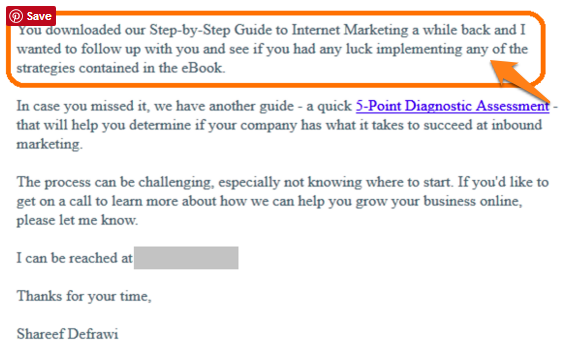
Inbound marketing when followed by outbound messaging, can yield great results for a business. Let’s understand this by the following example. When a prospect fills out a form on your landing page and downloads some information, it can be used to understand what kind of information the prospect is interested in. Based on that, you can now reach out to those prospects with more targeted messaging.
This e-mail from Bonafide is a good example of how outbound messaging can follow inbound marketing. In the first paragraph, they are reminding the customers of their previous activity, and based on that they are sending additional information to the customer that they may find relevant.
Combining Inbound Marketing with Paid Media
Inbound marketing alone isn’t sufficient to reach your target audience. Odds are high that many of your prospects haven’t even heard of your brand. Therefore, a good strategy is to combine inbound marketing with paid media. Paid Media includes TV commercials, print ads, radio placements, social media ads, and PPC. Combining paid media with inbound marketing, you can take your marketing to the next level.
A good way to do it is by publishing ads containing special offers of your company in paid media and creating a hashtag for the offer that customers find shareable.
For example, in 2013, Coca-Cola launched the ‘Share a Coke’ campaign, in which it replaced its brand name with one of the 250 most popular American names on the labels of its bottles, with more names available on the company’s website. As a result, the customers were prompted to visit the brand’s website and also share their experiences, images, etc. on social media with the hashtag – #Shareacoke. This campaign led to massive social media engagement and the brand’s popularity.

PPC Advertising
PPC advertising is an outbound marketing strategy with an inbound twist of being targeted towards a group of customers based on certain keywords. Here’s how to take your PPC marketing campaign from good to better.
- Bid on the right keywords in search engines.
- Create targeted PPC campaigns based on the interests, age, and location of your target audience.
- Make your ads compelling and concise, with a clear call-to-action so that the clicks come from the leads, who are genuinely interested in your products and services.
Outbound E-mails
Outbound e-mails are the e-mails that businesses send when trying to establish a connection with a potential customer. Inbound e-mails on the other hand are sent to prospects that have already shown interest in a company’s product or services. Although the two e-mail types are different in nature, they can be used in conjunction to help businesses get the most out of their investment.
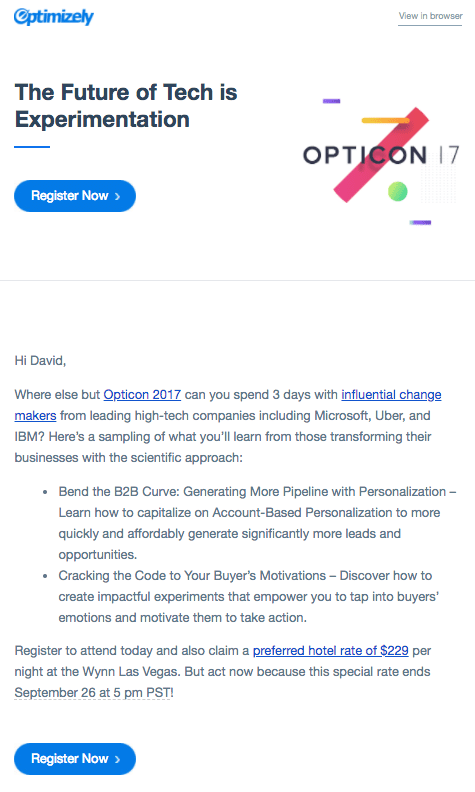
For example, you can send e-mails to your target audience before an event. Giving them information about your brand, how you can help them, and where they can find you during the event. Including a giveaway is a good way of getting more customers interested in your brand. The example given below is from the brand, Opticon. The e-mail is clear, concise in giving information about the event. It also includes an early bird offer to get more clients interested.
SEO and Paid Search
Search Engine Optimization and paid searches are two important aspects of modern marketing. As per a recent report by Hubspot, about 64% of marketers actively use SEO to boost their business. When the right keywords are integrated into your content, users discover your content organically. Besides using the right keywords, make sure your content is clear, concise, and offers something of value to the readers. The same principle applies to paid ads that display advertisements for customers who search for specific products and keywords. To make your marketing campaign effective, make sure both your SEO and paid advertising campaign are working hand-in-hand and you’re pursuing your targeted keywords across both channels.
Wrapping Up
Inbound strategies are critical keeping in mind the behavior of modern consumers, but outbound strategies are equally important as they complement the inbound marketing to maximize the results. Therefore, the key to success is to combine the two marketing strategies by looking for places in inbound marketing campaigns where outbound marketing touch points can be included.
