

This blog explores how home businesses can strengthen their online presence in 2026 by combining AI-powered accessibility tools with expert human guidance. It explains why accessibility is becoming essential for visibility, trust and compliance, and shows how hybrid models improve speed, accuracy and user experience. The guide also covers practical steps for adopting these tools, the SEO gains linked to accessibility improvements and the emerging trends shaping the future. Home business owners will learn how a balanced approach makes their websites more inclusive, search friendly and prepared for evolving digital expectations.
Key Takeaways
- Hybrid accessibility that combines AI automation with human expertise offers home businesses a practical and reliable way to improve website usability, accuracy and compliance.
- Automated tools help identify issues quickly, while experts provide the context and judgement needed for meaningful fixes.
- Accessible websites support stronger SEO performance, clearer site structure and higher engagement, often leading to measurable increases in organic reach.
- Choosing tools that offer both AI features and expert audits helps small and home based businesses maintain ongoing accessibility without heavy workloads.
- Preparing for 2026 means adopting adaptive, personalized and continuously monitored accessibility practices supported by expert validation.
Table of Contents
Why Accessibility Matters for Home Business Owners in 2026
The online landscape for home businesses is shifting fast, and accessibility is no longer something owners can afford to “get to later.” With more customers relying on digital channels for shopping, services, and communication, an inaccessible website or mobile applications directly impacts revenue, trust, and visibility. According to the Click Away Pound survey, around 71% of internet users with disabilities leave a website when they encounter accessibility barriers.
Step-by-Step Integration Guide for Home Businesses
Integrating accessibility into a home business website becomes far more manageable when approached in clear, practical steps. A structured process helps owners apply both automated tools and expert review effectively, without disrupting daily operations. Below is a simple guide that outlines how to get started and maintain long-term progress.
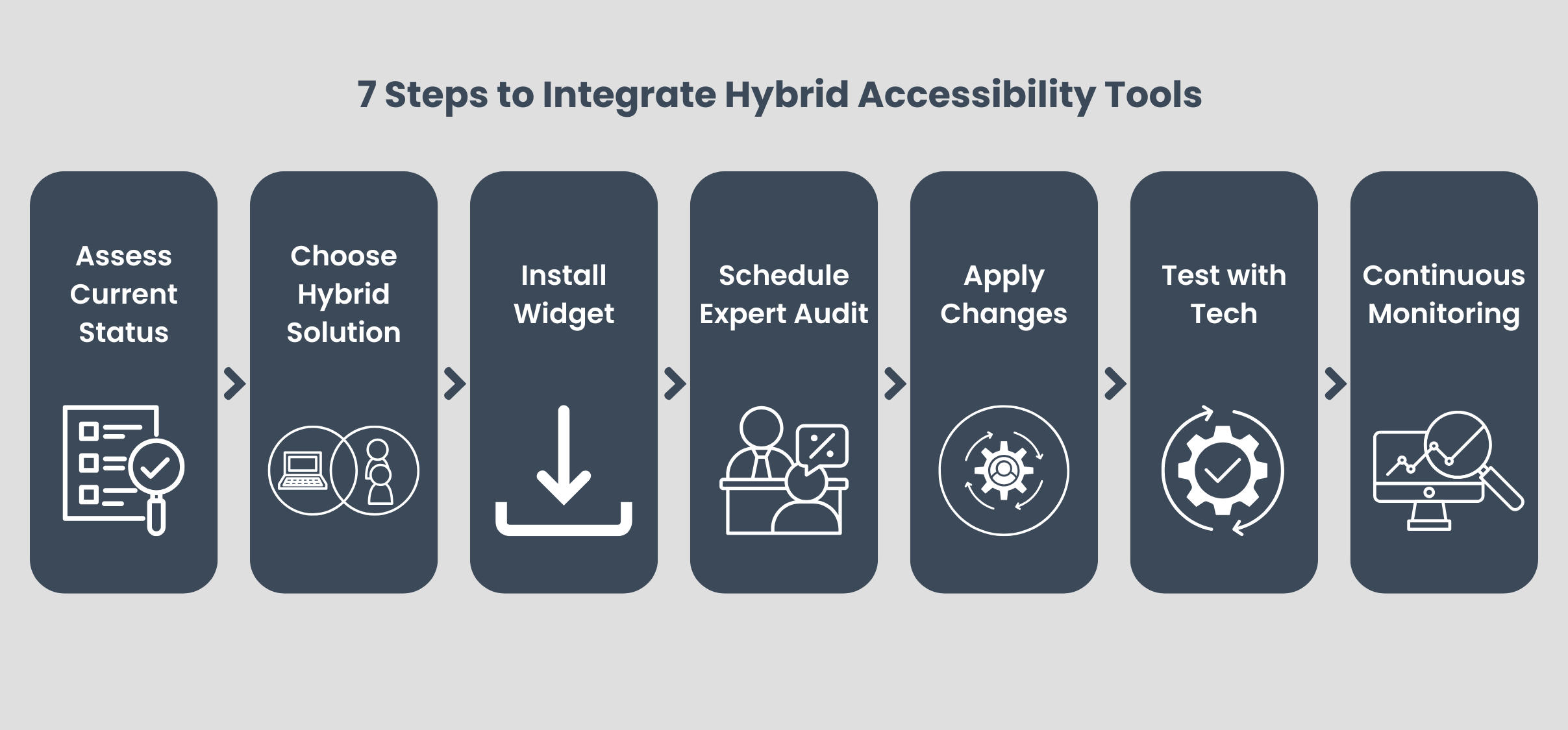
1. Assess your website’s current accessibility status
Begin by running an automated scan to understand your baseline. This will highlight common issues such as missing alt text, low contrast colors, or untagged elements. Having this initial overview makes it easier to decide what level of support you need.
2. Choose the right hybrid solution
Select an accessibility tool that offers both AI automation and human expertise. Look for features like auto remediation, expert auditing, ongoing monitoring and clear reporting. The choice should match your website’s size, content frequency and long-term goals.
3. Install the accessibility widget or integration
Most platforms offer a simple installation process through a plugin, script or integration panel. This enables automatic scans and immediate fixes for basic issues so your site starts improving from day one.
4. Schedule a manual expert audit
Once the widget is installed, invite accessibility specialists to review the site. They will validate automated findings, correct contextual errors and identify issues automation cannot recognize. This step ensures accuracy and WCAG alignment.
5. Review findings and apply recommended changes
Follow the report provided by experts. Some changes may be handled by the system automatically, while others, such as rewriting alt text or adjusting layout structure—may need a small manual update.
6. Test with assistive technologies
Use screen readers, keyboard navigation and zoom tools to confirm that the experience is smooth and logical. Real user testing adds another layer of validation that automation cannot replicate.
7. Set up a continuous feedback loop
Continue monitoring using your hybrid tool’s ongoing checks. Encourage customers to report accessibility issues and revisit audits periodically. This helps maintain a stable and inclusive experience as your content grows.
Together, these steps offer a practical roadmap for how to integrate AI and human accessibility tools in home business websites, ensuring long-term quality and consistency
Core Benefits of AI and Human Expertise for Online Presence
Improving accessibility can feel demanding for home businesses, but combining automation with human judgement creates a balanced, efficient path forward. This approach allows owners to address key issues quickly while still ensuring the quality and accuracy that users expect.
Key advantages include:
- Faster issue detection: AI tools scan pages within seconds, highlighting missing alt text, contrast problems and structural gaps. This gives small business owners a clear starting point without manually checking every element.
- Contextual improvements: Human experts refine what automation cannot. They craft accurate image descriptions, adjust reading order and interpret user experience challenges in ways AI alone cannot manage. Home business owners often rely on affordable WCAG experts for small home business online presence to ensure these detailed fixes are handled accurately and cost effectively.
- Better search visibility: A properly structured website supports stronger SEO performance. Search engines read accessible content more easily, improving indexing and overall visibility for home businesses.
- Higher user trust and engagement: A smooth, inclusive experience encourages visitors to stay longer, return more often and feel more confident interacting with the brand.
Together, these benefits illustrate how a blended model supports the benefits of hybrid AI human accessibility for home business, helping websites become more usable, visible and dependable without overwhelming their owners.
Top AI Accessibility Tools with Human Support Options
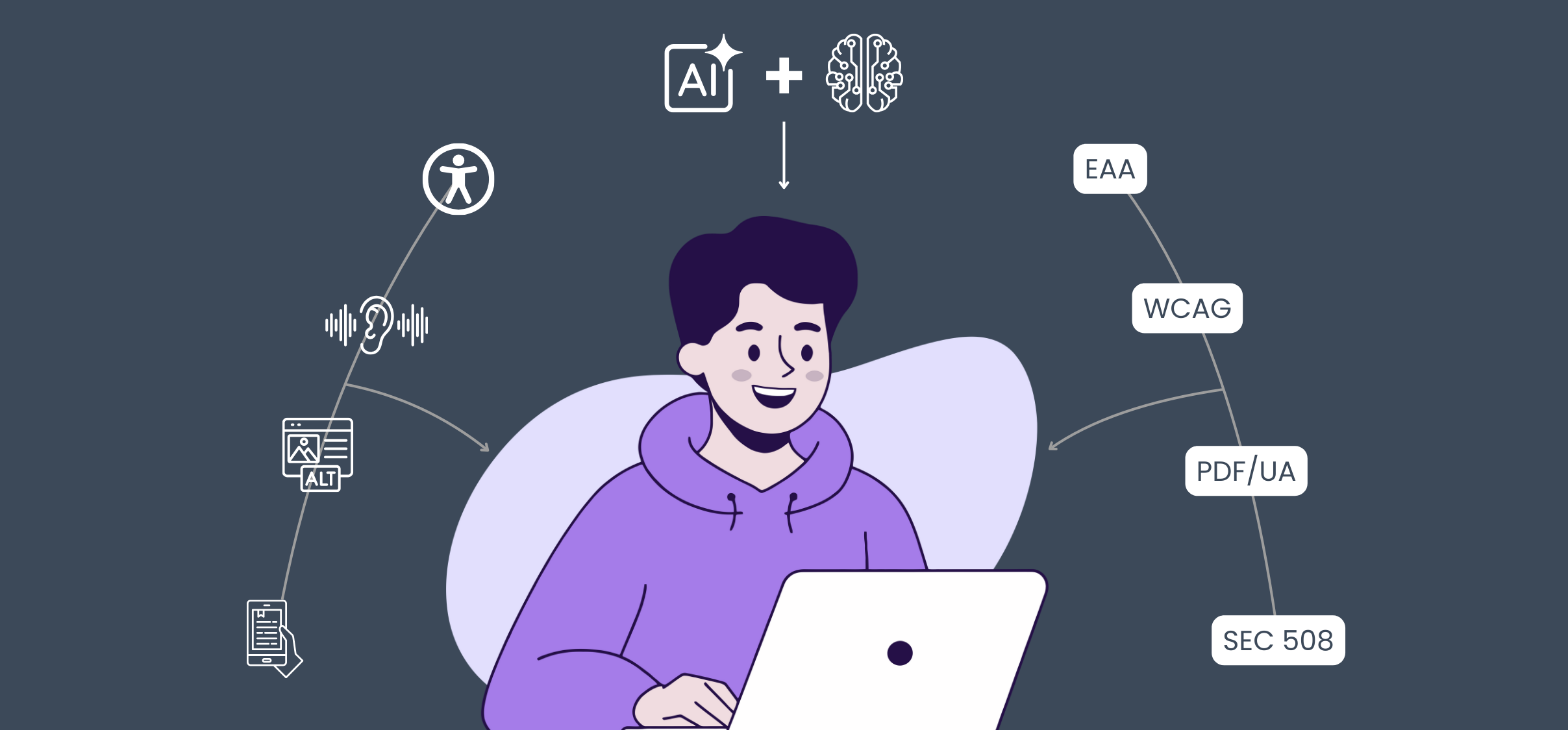
For home businesses searching for the best AI accessibility tools with human experts for small business sites, several platforms offer a blend of automation and expert assistance. Below is a simple list of reliable hybrid solutions and their capabilities.
● DocumentA11y
Offers AI-assisted document accessibility checks along with expert remediation and manual audits to ensure accurate, WCAG aligned results.
● accessiBe
Provides automated website scanning supported by human experts who handle detailed audits and complex accessibility fixes.
● EqualWeb
Combines AI-driven accessibility detection with professional manual remediation to help small businesses stay compliant.
● UserWay
Provides automated accessibility scanning and optional expert audits to support ongoing compliance for small and home-based websites.
SEO and ROI from Hybrid Accessibility Strategies
Improving accessibility has direct and measurable benefits for search performance. When a website is structured clearly, labeled correctly and easy for assistive tools to interpret, it also becomes easier for search engines to crawl. This alignment strengthens visibility, supports organic growth and helps home businesses compete online. The SEO advantages of AI human hybrid accessibility for online home stores become clear when looking at how accessibility and search behavior overlap.
Evidence of SEO and traffic improvement
Research shows a strong connection between accessibility updates and growth in organic reach.
- A recent report found accessible websites enjoyed as much as a 23% increase in organic traffic, as well as ranking for 27% more keywords.
- Because accessibility practices overlap many SEO friendly characteristics, such as semantic HTML, proper heading structure, descriptive alt text and clean navigation, making a site accessible often means it becomes easier for search engines to crawl and understand.

What This Means for Home Businesses
For home-based online stores, even modest improvements in discoverability can create meaningful gains. Better structure helps search crawlers understand product descriptions, internal links and content hierarchy. Visitors who arrive through search engines are more likely to stay on a site that feels organized and easy to navigate, which further boosts ranking signals. Over time, accessibility supported improvements can lead to a twenty to thirty percent increase in overall reach for small businesses that previously struggled with visibility.
By pairing AI-powered scanning with human expertise, home businesses can strengthen usability, improve search performance, and build a more reliable customer experience without stretching limited time or resources. This sets the stage for understanding how upcoming trends in 2026 will influence the future of accessible online growth.
Future Trends and Actionable Next Steps
As home businesses continue strengthening their digital presence, accessibility will evolve in ways that blend automation, personalization and expert guidance. The landscape is shifting quickly, and understanding 2026 trends in AI-powered accessibility tools with human oversight for businesses can help owners stay ahead and build long-term resilience.
Emerging Accessibility Trends in 2026 and Beyond
1. AI-driven personalization validated by experts
AI tools are beginning to adapt website experiences based on individual user needs, such as adjusting font sizes, simplifying layouts or recommending alternative navigation paths. Human experts will play a key role in reviewing and validating these adaptive elements to ensure they remain accurate, respectful and compliant.
2. Real-time accessibility scoring integrated into site builders
Website builders and ecommerce platforms are expected to introduce built in scoring systems that offer instant guidance while editing pages. Human consultants will continue to refine these automated suggestions so businesses can avoid relying solely on machine decisions.
3. Predictive accessibility alerts
Newer AI systems are moving toward prediction rather than reaction. They will soon be able to anticipate issues before content goes live. Human reviewers will verify these predictions and ensure that the fixes align with WCAG requirements.
4. Deeper integration with marketing and analytics tools
Accessibility insights will start feeding directly into SEO dashboards and conversion tracking platforms. This will help home businesses see exactly where accessibility intersects with performance and revenue.
5. Expanded use of voice and multimodal testing
Voice interfaces, gesture tools and alternative input methods will grow more common in testing workflows. Human testers will be essential for evaluating how real users navigate across different devices and contexts.
Actionable Next Steps
Now is the right time for home businesses to begin auditing their websites using hybrid accessibility models. Start with an automated scan, follow up with an expert review and establish a routine monitoring cycle. This ensures your website stays compliant, user-friendly, and aligned with the accessibility expectations shaping the future.
A proactive approach today makes your online presence stronger, more inclusive and better prepared for the digital shifts coming in 2026.
FAQ on AI-Powered Accessibility Tools
Do hybrid accessibility tools work with all website platforms?
Most hybrid accessibility solutions are built to support popular platforms such as WordPress, Shopify, Wix and Squarespace. They typically integrate through a script, plugin or app extension. However, custom coded websites may require additional setup or developer involvement. It is always helpful to check compatibility before choosing a tool, especially for home businesses using niche themes or older templates.
How often should a home business recheck its accessibility status?
A quarterly review is usually enough for small sites with occasional updates, but more frequent checks are recommended for stores that add new products or publish regular content. Automated monitoring handles basic detection, but manual reviews ensure that deeper issues are not missed as your website evolves.
Can accessibility improvements reduce customer support requests?
Yes. When a website is easier to navigate, customers are less likely to reach out for help with tasks like finding product details, completing a purchase or accessing resources. Clear structure and well labeled content can significantly reduce the volume of support queries, saving time for small business owners.
Do accessibility updates affect website speed or performance?
Most hybrid tools are designed to have minimal impact on load time. Lightweight scripts and optimized widgets ensure that accessibility features run efficiently. In many cases, accessibility improvements such as cleaner code and better structure can actually enhance performance rather than hinder it.
Is accessibility only important for customers who use assistive technology?
No. Accessibility improvements benefit all visitors. Clear navigation, readable text, improved color choices and consistent structure help every user, not only those with disabilities. These enhancements create a smoother experience, increase trust and contribute to better engagement across your entire audience.