

Dan Cataldi’s journey from a high-pressure corporate career to founding personalized footwear company Groov offers important lessons about mental health, product validation, leadership, viral attention, and the kind of conviction entrepreneurs develop only by taking action.
This article is based on PowerHomeBiz’s interview with Groov founder and CEO Dan Cataldi.
Excerpt
After a panic attack forced him to reconsider a successful corporate career, Dan Cataldi returned to a childhood ambition: becoming an inventor. The Groov founder shares how mental health, customer discovery, a Wharton class project, physical-product challenges, and a 60-second meeting with NFL star Von Miller helped him build a personalized footwear company—and why entrepreneurial conviction comes from action rather than certainty.
Key Takeaways
- A successful career on paper may still be unsustainable when the work is disconnected from a person’s deeper goals.
- Founder conviction is usually built through experiments, customer behavior, sales, and repeated learning—not sudden certainty.
- Early customer discovery should measure purchases, repeat orders, referrals, usage, and returns rather than rely solely on compliments.
- A technically sophisticated product must still provide a simple, intuitive customer experience.
- Viral attention is valuable only when a startup has a clear message, a functioning website, a place to capture demand, and a communication plan.
- Genuine customer and influencer advocacy can be more powerful than a carefully scripted paid endorsement.
- Founders must learn to separate their personal worth from the successes and setbacks of their companies.
Table of Contents

A Career That Looked Successful—Until It No Longer Felt Sustainable
Before founding Groov, Dan Cataldi had what many young professionals would consider an enviable career. He worked closely with the founder of a Fortune 100 company, gained access to senior leaders, and built a résumé that appeared to be moving in the right direction.
Internally, however, Cataldi felt disconnected from the life he was building.
“I had a fantastic job on paper: considerate managers, high-level exposure, and an impressive line on my résumé. But it wasn’t what I truly wanted for myself.”
Instead of confronting that dissatisfaction, he poured more energy into his work. Cataldi now describes that pattern as using “the anxiety of task-perfectionism” to conceal the deeper stress created by ignoring his personal ambitions.
>> READ THE QUESTION AND ANSWER: Building Conviction One Step at a Time: A Q&A With Groov Founder Dan Cataldi
The pressure continued to build. When he began experiencing tightness in his chest, he initially assumed he had strained a muscle. Eventually, the symptoms became so frightening that he went to an emergency room convinced he was dying.
The tests came back clean. The doctor told him he had experienced a panic attack.
The National Institute of Mental Health explains that panic attacks may involve chest pain, a pounding heart, difficulty breathing, dizziness, trembling, and an intense fear of losing control or dying. Anyone experiencing new, severe, or persistent physical symptoms should seek professional medical attention rather than assume anxiety is the cause.
For Cataldi, the diagnosis did not mean that everything was fine simply because the tests had ruled out an immediate physical emergency.
“The ER test results came back clean, and the doctor told me that, for all intents and purposes, I was fine. Clearly, I wasn’t. Clearly, I had a lot to figure out.”
He did not return to work that day—or for the next six weeks. He took time away, worked closely with a therapist he trusted, and began examining why a career that appeared successful had become so difficult to sustain.
That period forced him to revisit a dream he had abandoned years earlier.
“When I was young and someone asked me what I wanted to be when I grew up, I’d always say, without hesitation, Inventor. Somewhere along the way I’d convinced myself that dream was a relic of a bygone era. But it never stopped calling…and the panic attack left me no choice but to pick up the phone.”
Speaking Openly About Mental Health at Work
When Cataldi returned to the office, he made an unusual decision. He stood before several dozen colleagues, including senior executives, and gave a presentation about managing his mental health in the workplace.
He was not required to disclose what had happened. He chose to speak because he believed his vulnerability might help someone else recognize a similar struggle.
“Like many men, I hadn’t been raised to be especially fluent in my own emotions—and I suspected I wasn’t alone in that room. If hearing my story could give someone else permission to take their own mental health seriously, it was worth the discomfort of sharing it.”
His decision was also a way to stop performing a version of himself that looked successful while concealing what he was actually experiencing.
“Standing up in front of those people and saying, ‘I’m not okay, and here’s what I’m doing about it’ was how I started to close the gap between who I knew myself to be and how I displayed myself to the world.”
Mental health is not merely an individual productivity issue. The World Health Organization’s guidelines on mental health at work emphasize organizational interventions, manager training, worker support, return-to-work practices, and safe working environments. The Occupational Safety and Health Administration likewise recognizes that workplace stress can affect health, engagement, productivity, and relationships at work.
From a Wharton Class Project to a Real Company
Groov initially took shape in an Innovations course at the Wharton School taught by Professor Serguei Netessine.
The class required students to present, test, and defend their ideas while classmates progressively voted projects out of the competition. Cataldi describes it as a combination of Shark Tank and American Idol.
The course helped him turn a broad product idea into a more structured business concept. The critical difference, however, was what happened after the semester ended.
“I didn’t stop moving when the class ended.”
Cataldi continued developing the product and eventually secured the University of Alabama football team as a paying pilot customer. He later put his MBA program on hold to build Groov full-time.
His connection with Wharton continued. Netessine and Professor Peter Fader became early investors. Groov also received the Penn Launch Award and was recognized as a 2023 winner of Wharton’s Khan Family AI for Business Award.
Cataldi is candid about using business school as a form of security while he explored the idea.
“Perhaps it would be cooler to say I quit everything upon waking up with a brilliant idea and just immediately started building. That’s not how it happened. But once I did take that first step, I was moving—and I never stopped.”
His experience challenges the belief that “real” entrepreneurs must abandon everything immediately. A founder may begin with a class, side project, prototype, pilot customer, or small experiment. The important question is whether those early steps produce enough evidence to justify the next one.
Customer Discovery Means Watching What People Do
Groov’s early customer discovery was direct and hands-on. Cataldi and his team placed prototypes under people’s feet and asked for reactions.
They tested the product with classmates, athletes, nurses, people experiencing chronic discomfort, and people who had never considered buying insoles.
Cataldi initially expected the strongest response from consumers with obvious foot-related concerns. Instead, he found that many participants had simply accepted low-level shoe discomfort as normal.
Still, positive comments were not the most valuable evidence.
“The more important validation came from behavior, not compliments.”
According to Cataldi, the University of Alabama football team became a paying pilot, early buyers purchased additional pairs for different shoes, and Groov served its first thousand customers before processing its first refund.
“People weren’t merely saying the idea was interesting; they were paying for it, using it, repurchasing it, and telling other people.”
That distinction is central to effective customer discovery. The U.S. Small Business Administration’s market-research guidance recommends examining demand, market size, customer location, competition, pricing, and the factors that differentiate an offer. Founders need evidence that people will act—not merely say that an idea sounds promising.
PowerHomeBiz’s guide on determining whether there is demand for a product similarly recommends using prototypes and minimum viable products to validate assumptions with real users before committing to large-scale production.
Customer research also told Groov what customers did not want. They did not want a lengthy biomechanics lesson, a complicated fitting appointment, or unnecessary friction. They wanted the process to feel fast and intuitive.
That feedback became part of the product brief: make advanced personalization feel easier than buying a generic product from a shelf.
Making Complex Technology Feel Simple
Building Groov required solving several interconnected problems.
First, the team needed to turn a consumer smartphone into a usable three-dimensional capture tool. Unlike a controlled clinic, customers’ homes contain inconsistent lighting, movement, backgrounds, and scanning techniques.
Cataldi says the company addressed those variables by guiding customers through multiple scans with visual, audio, and haptic feedback.
Second, the scan itself was only raw information. The company needed a system that could translate thousands of anatomical data points into a physical surface while considering the type of footwear in which the insert would be used.
A cleat, work boot, sneaker, dress shoe, and ski boot do not provide identical space or interact with the foot in the same way.
Finally, Groov had to develop a repeatable process for producing one-of-one physical products. Traditional factories become efficient by manufacturing identical objects. A personalized-product company must maintain accuracy while producing a different item for nearly every order.
“The hardest part has been making a technically complex process feel almost boringly simple.”
This is an important product-development principle. Customers generally do not purchase complexity for its own sake. They buy the outcome that complexity makes possible.
Entrepreneurs preparing to launch a new product successfully must therefore evaluate the complete customer experience—from ordering and onboarding to production, delivery, support, returns, and repeat purchases.
Sixty Seconds With Von Miller
One of Groov’s most important opportunities began when Cataldi attended the NFL Sack Summit in Las Vegas, an event where elite pass rushers share techniques, training practices, and recovery strategies.
He arrived alone, carrying a product and hoping he could persuade players to let him scan their feet.
“I went out there with no real expectations beyond the knowledge that I can’t build a business by doing nothing.”
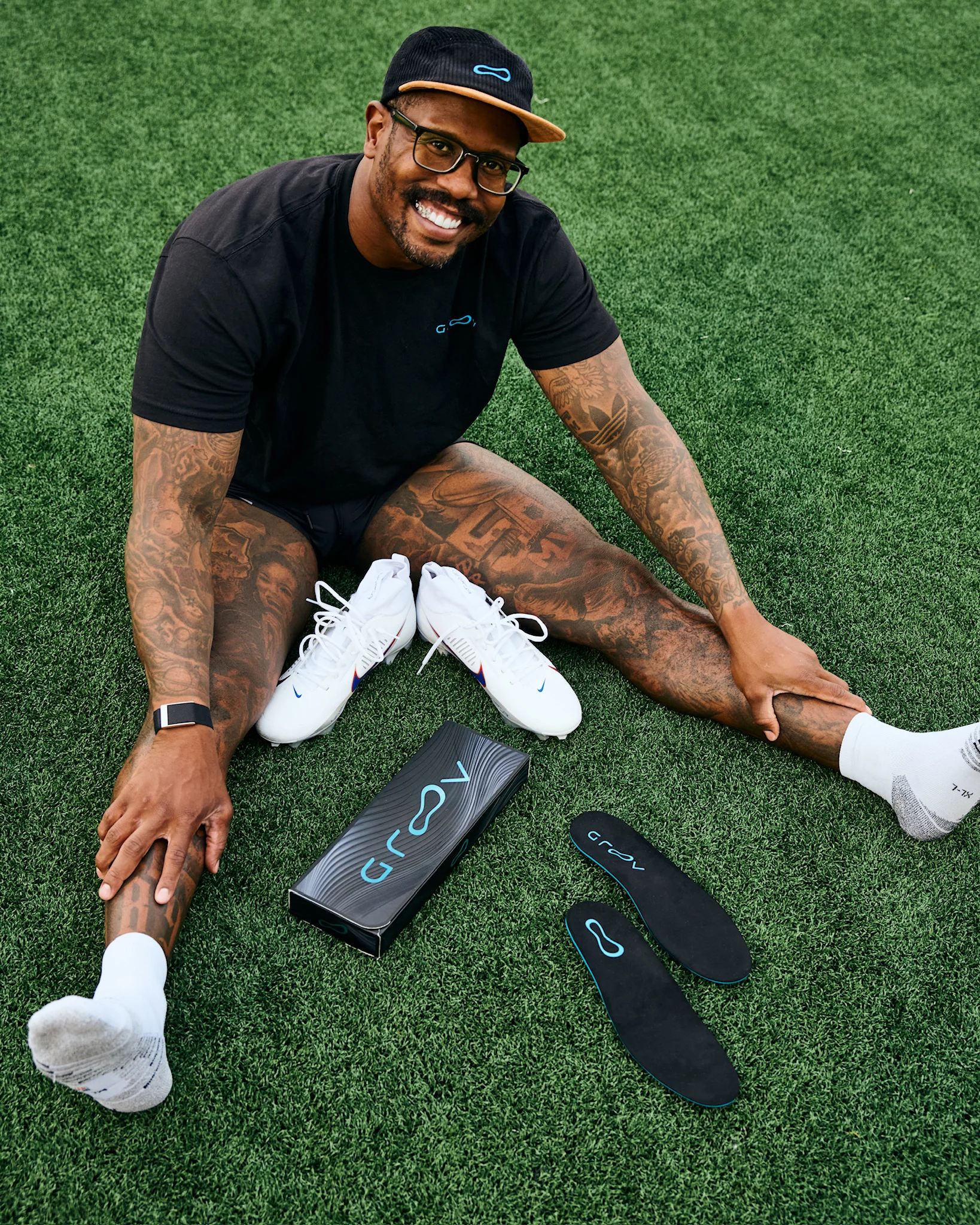
Cataldi scanned multiple NFL players and offered to make them complimentary pairs. Eventually, he received approximately one minute of Von Miller’s attention.
Most of that minute was spent completing the scan.
“The remaining second was basically me saying, ‘Look, I know people send you stuff constantly. But if you actually try these, you’re going to like them. Trust me.’”
Then Miller left, and Cataldi continued scanning other players.
The moment reinforces an essential lesson about building an effective elevator pitch: a pitch must be clear enough to create interest, but even an excellent pitch cannot compensate for a weak product.
“A 60-second pitch doesn’t close anyone. The Groovs he wore after that did.”
When Organic Advocacy Created a Viral Moment
Several weeks later, Cataldi was in Costa Rica when he woke to approximately 150 notifications. Messages, comments, and congratulations were arriving faster than usual.
Miller had received the insoles, tried them, and posted about Groov to his Instagram audience. According to Cataldi, the post was unsolicited and unpaid.
The result was approximately 10,000 new registrations for Groov’s pre-launch waitlist.
A few months later, Cataldi says Miller became an investor and brand ambassador, while Groov became an official product partner of the NFL Players Association.
The sequence matters. The relationship began with a product experience, not a negotiated promotional script.
“You can’t manufacture conviction. You can create the conditions for it. You show up, you do the work, you deliver a genuinely good product—and then you trust the product to do the rest of the talking.”
Organic advocacy can be extremely powerful, but founders should remember that subsequent paid, investment, employment, gifting, or ambassador relationships may create disclosure obligations. The Federal Trade Commission’s guidance for endorsements and influencers explains when material connections between brands and endorsers should be clearly disclosed.
Viral Exposure Is Only Useful When the Business Is Ready
Many founders dream of receiving attention from a major athlete, celebrity, publication, or creator. Cataldi warns that attention can expose weaknesses just as quickly as it can create opportunities.
The first requirement is a clear destination.
“A viral moment is wasted if the website is slow, the message is confusing, or the customer has no obvious next step.”
Groov benefited because visitors could join a waitlist. The company did not have to immediately process thousands of orders through a fulfillment operation that was not yet prepared for that volume.
Founders should also communicate honestly about capacity. If customers cannot be served immediately, the company should explain what happens next, how long the process may take, and when customers can expect another update.
The third priority is learning. A surge in traffic gives a startup an unusually concentrated view of customer behavior. Founders should track:
- Where visitors came from
- Which message generated the response
- What questions prospects asked
- Where people abandoned the process
- Which visitors converted
- Whether interest continued after the initial exposure
“A spike in attention is not just a marketing event; it is a compressed customer-discovery exercise.”
Finally, the underlying product and customer experience must be strong. As Cataldi puts it, exposure is “an amplifier, not a substitute.”
PowerHomeBiz offers additional guidance on how to build word-of-mouth for a business and attract customers and increase sales after the first burst of attention has passed.
The Idea Is the Easy Part
Moving from corporate strategy into consumer-product entrepreneurship required Cataldi to reconsider his role.
One of his first lessons was that forming the idea required only a small fraction of the total work.
“The idea is the easiest part. Nearly all of my time—and my team’s time—is spent chasing the vision, not forming it.”
The work consists of building, testing, breaking, revising, communicating, manufacturing, shipping, and solving problems that were invisible when the business existed only as a concept.
Cataldi also learned that a founder does not need to possess every technical or operational skill personally.
“I never manufactured a pair of insoles with my own hands. I can’t write computer vision code. I can barely keep track of the company’s FedEx login credentials.”
Instead, he sees his role as connecting specialists, customers, and the larger company mission.
“I think of myself as a conductor who played a bit of clarinet in middle school. My job is not to play every instrument. My job is to make sure we’re playing the right song, in the right rhythm, with the right people in the right seats.”
The analogy offers a useful leadership model. Founders do not need to be the best engineer, designer, marketer, salesperson, and operations manager in the company. They do need to establish direction, recruit capable people, communicate clearly, and ensure that technical ambition remains connected to a genuine customer problem.
The Hardest Work Does Not Appear on a Pitch Deck
When asked about the most difficult part of building Groov, Cataldi did not point to software development, manufacturing, financing, or marketing.
He pointed inward.
“Building a company has a way of locating every insecurity, blind spot, and self-protective habit you have.”
For a long time, he waited for the fear to disappear and for the day when he would finally feel like a “real founder.” That moment never came.
Instead, he learned to recognize fear without allowing it to make decisions for him.
He also had to loosen his attachment to perfection. Early in the company’s development, he treated each decision as though one error could permanently damage something precious.
“Eventually, I realized I was just a kid playing with blocks. There was nothing sacred to ruin yet. My job was to build, observe what fell over, and build again with better information.”
That is particularly relevant to physical-product founders. A prototype is not a finished company, and a failed experiment is not necessarily a failed business. Early-stage companies need responsible experimentation, honest observation, and the ability to revise quickly.
The deeper challenge was learning to care intensely about Groov without treating every result as a judgment of his value as a person.
“Every setback cannot become a referendum on my worth, and every success cannot belong to me alone.”
Managing Mental Health as a Founder
Cataldi now manages stress by deliberately stepping away from continuous conceptual thinking and returning to physical activities.
Surfing, woodworking, drawing, and spending time with family help create that separation.
“I remain driven by a pretty foundational desire to make things with my hands and build something genuinely useful. That instinct, whether applied to a company or a piece of furniture, keeps me grounded.”
He also remembers a saying from his grandfather, Bernie:
“The first 100 years are the hardest.”
His grandfather lived to 94.
For Cataldi, the phrase is not an instruction to tolerate harmful conditions. It is a reminder that difficult periods are part of life and that discomfort does not always mean he is moving in the wrong direction.
Founders experiencing persistent anxiety, panic symptoms, depression, or difficulty functioning should consider speaking with a qualified health professional. Self-care practices can support well-being, but they are not substitutes for professional evaluation or treatment when those services are needed.
The Central Lesson: Conviction Is Built
Cataldi grew up reading polished accounts of famous entrepreneurs. By the time those stories reached the public, much of the hesitation, confusion, and uncertainty had been removed.
The founders appeared to have known from the beginning exactly what they were meant to build.
That mythology delayed Cataldi because he believed entrepreneurship required an unwavering certainty he did not possess.
“What I eventually learned is that most meaningful conviction is accumulated through action.”
A founder creates something small. Someone responds. The founder learns, revises, and tries again. Eventually, a customer pays. Another customer returns. Someone recommends the product. A pilot succeeds. Evidence gradually begins to support what was once only a belief.
Founders must still move before all the evidence is available. That is an unavoidable part of entrepreneurship. But fear is not proof that the founder is unprepared, and courage does not require complete certainty.
“You do not need to feel certain that the entire tower you have in your vision will hold…you just need enough conviction to place the next block.”
That may be the most transferable lesson from Cataldi’s story. Entrepreneurship rarely begins with total confidence. It begins when someone gathers enough information, accepts the remaining uncertainty, and takes the next responsible step.
Frequently Asked Questions
Dan Cataldi, Founder of Groov
Dan Cataldi is the founder and CEO of Groov. He previously worked closely with the founder of a Fortune 100 company, attended Brown University, studied at the Wharton School, and competed as an NCAA Division I wrestler. He developed the initial Groov concept through Wharton’s Innovations course.
What is Groov?
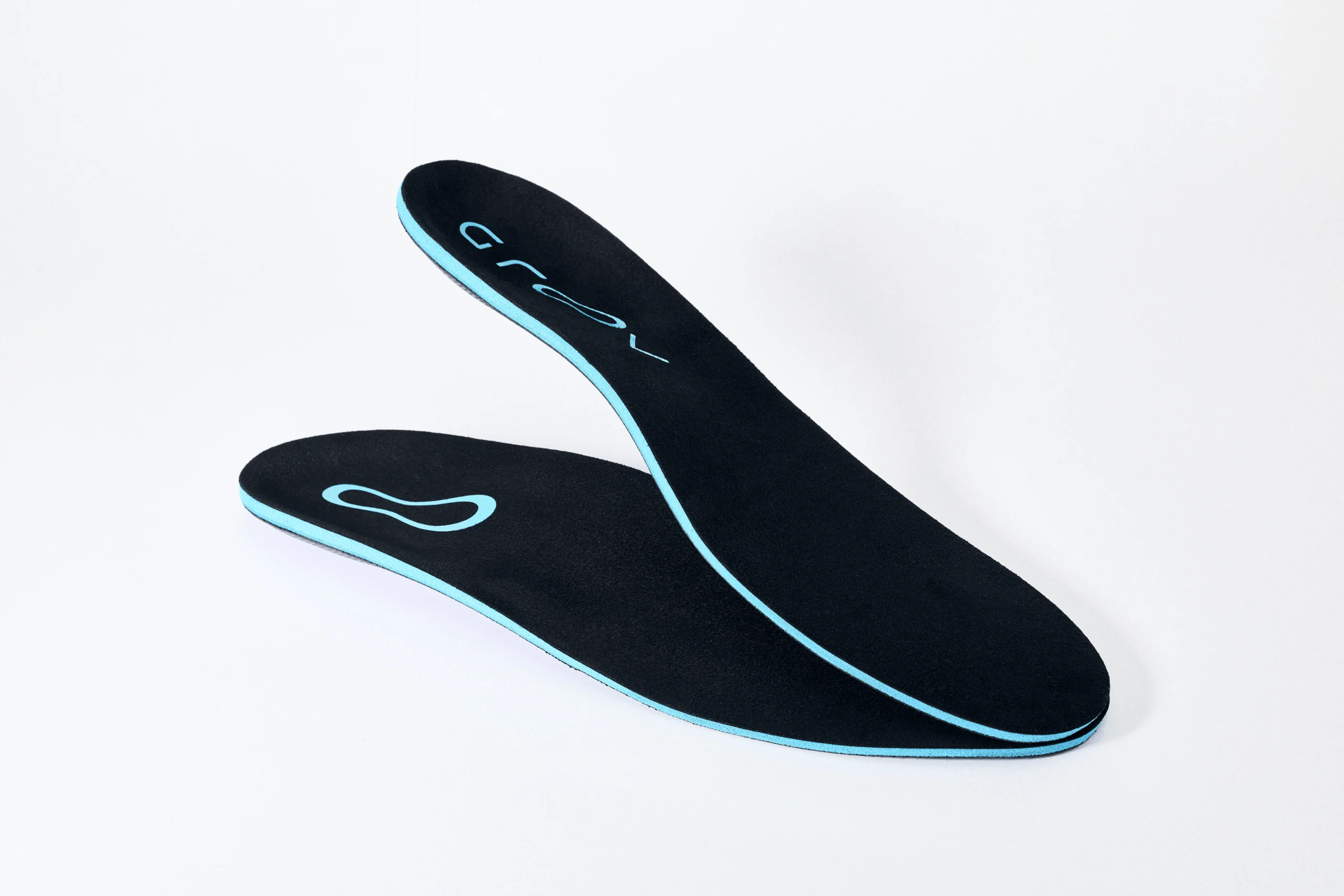
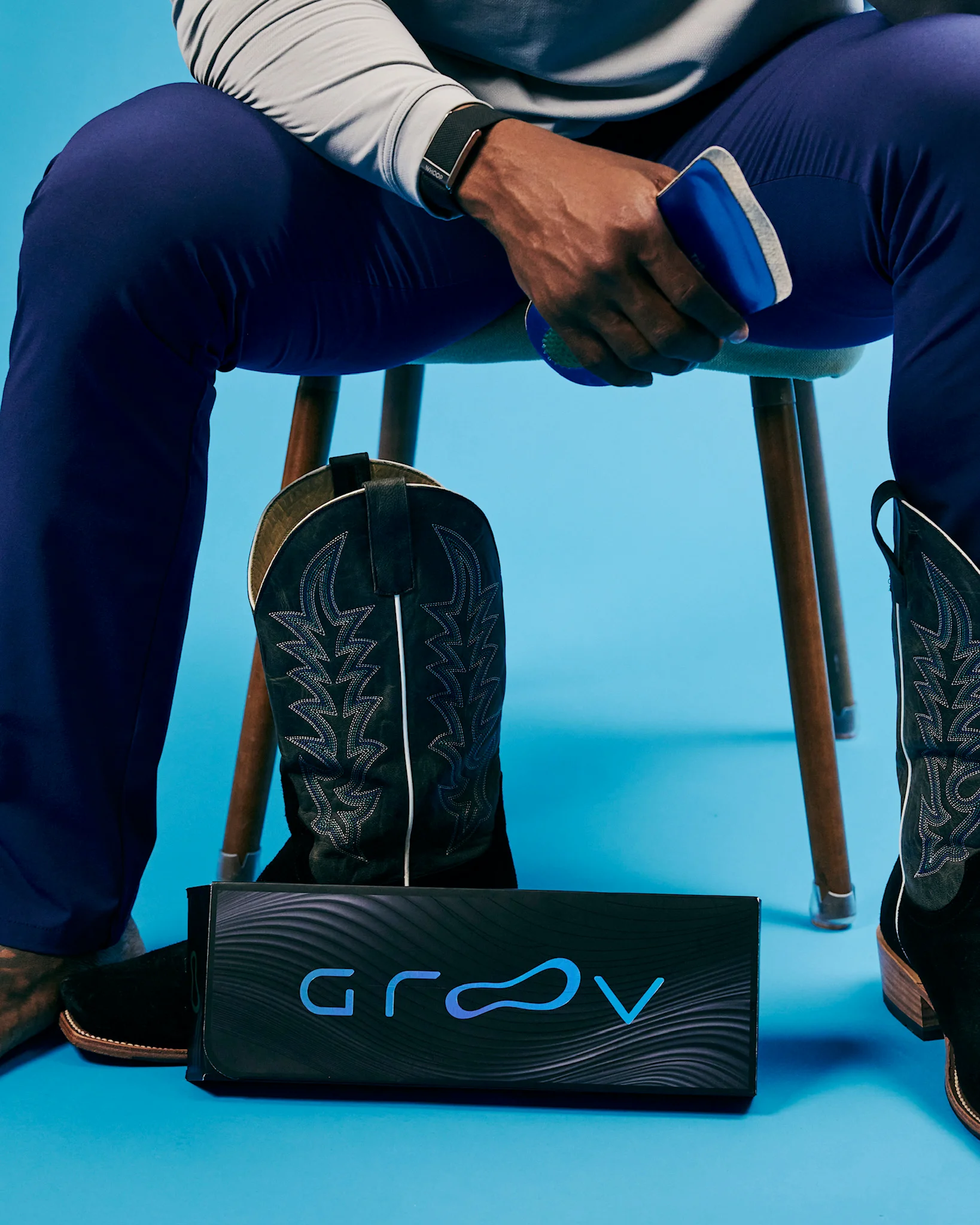
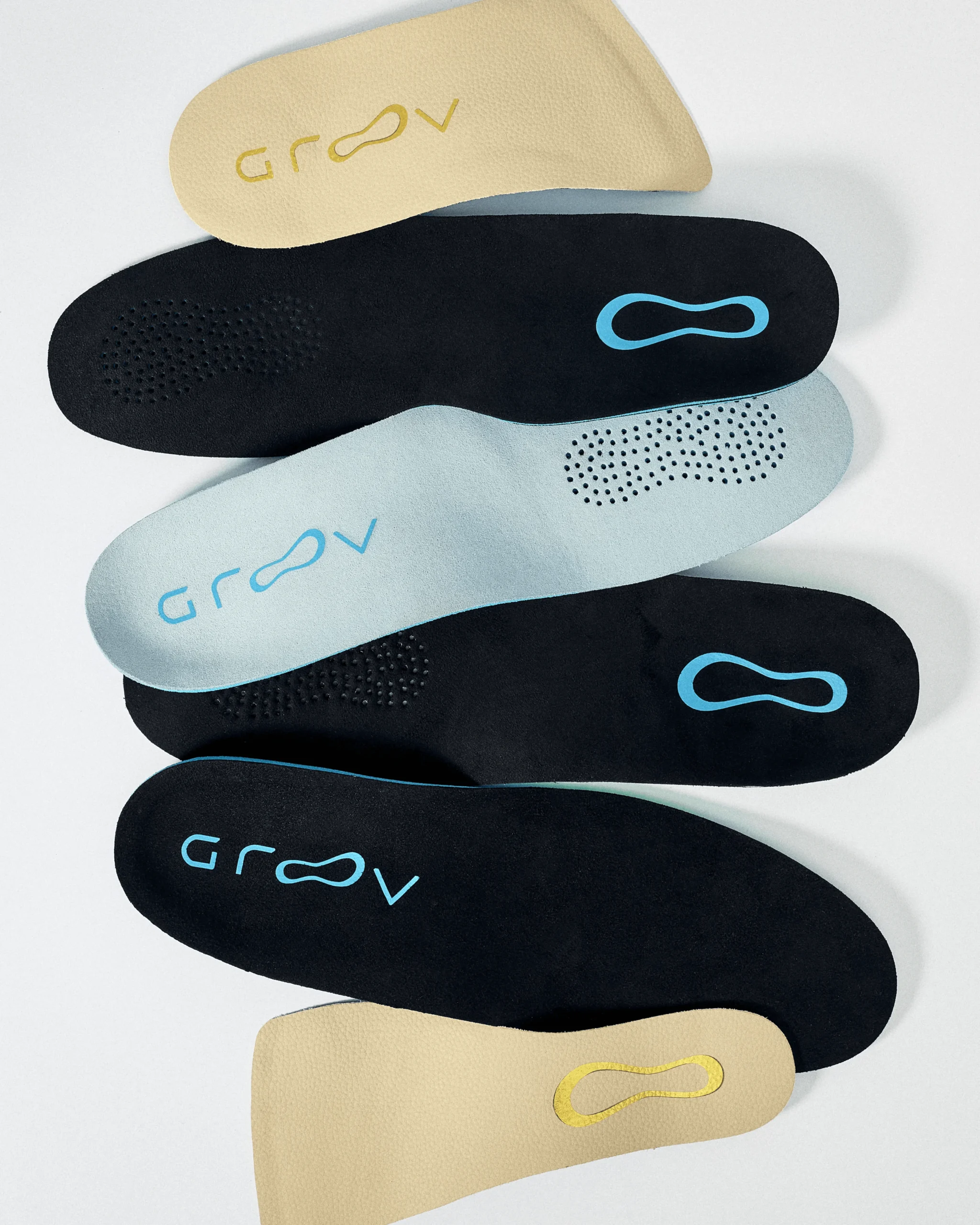
Groov is a footwear company that uses smartphone-based scanning and personalization technology to produce custom insoles for individual customers and different types of shoes. The company positions Groov as a footwear product, not a diagnostic device or replacement for medical treatment.
How did Groov begin?
Groov began as a Wharton class project. Cataldi continued developing the concept after the class ended, tested prototypes with potential users, secured the University of Alabama football team as a paying pilot, and eventually paused his MBA studies to build the company full-time.
How did Von Miller become involved with Groov?
Cataldi met Miller at the NFL Sack Summit in Las Vegas and scanned his feet in approximately 60 seconds. Miller later received and tried the product. According to Cataldi, Miller voluntarily shared Groov with his Instagram audience, helping generate around 10,000 pre-launch waitlist registrations. Miller subsequently became an investor and brand ambassador.
What did Groov’s customer discovery process teach the company?
The process showed that behavior was more informative than compliments. Purchases, repeat orders, usage, referrals, and returns provided stronger validation than positive comments alone. It also revealed that customers wanted a quick, simple experience rather than a complicated explanation of the underlying technology.
What should startups do before receiving viral attention?
Startups should have a fast, functional website, clear positioning, an obvious next step, a system for capturing leads or orders, realistic capacity plans, and a way to communicate delays. They should also track visitor sources, questions, conversion behavior, and reasons people leave without purchasing.
What is Cataldi’s main advice for product founders?
Get an early version of the product into real customers’ hands. Observe behavior, improve the product, and pay attention to manufacturing consistency, margins, packaging, shipping, support, inventory, and repeatability. A prototype is not truly scalable until later customers can receive the same quality experience as early customers.
About Dan Cataldi:
Dan Cataldi is the founder and CEO of Groov, a company building technology that figures out the perfect surface for your body to stand on and lets you put it inside any shoe (from a ski boot to a stiletto). After growing up in the same Long Island home his mother was raised in (and with a father who sold orthotics), Dan headed to Brown University, where he somehow studied both theoretical mathematics and poetry. After spending several years working with the founder of a Fortune 100 company, he enrolled at The Wharton School, where Groov was dreamed up in Serguei Netessine’s Innovations class. After winning the Penn Launch Award and landing Alabama Football as a pilot customer, he dropped out of his MBA program to focus full-time on building Groov into the future of footwear. Formerly an NCAA Division I wrestler and presently a mediocre surfer, Dan is someone whose curiosity tends to wander. He’s been a line cook, he’s been a playwright, and he’s surprisingly good on horseback for a city slicker. When he’s not trying to make every shoe your comfiest shoe, he enjoys making music, performing stand-up comedy, learning about ancient history, studying human psychology, and building things with his hands.