

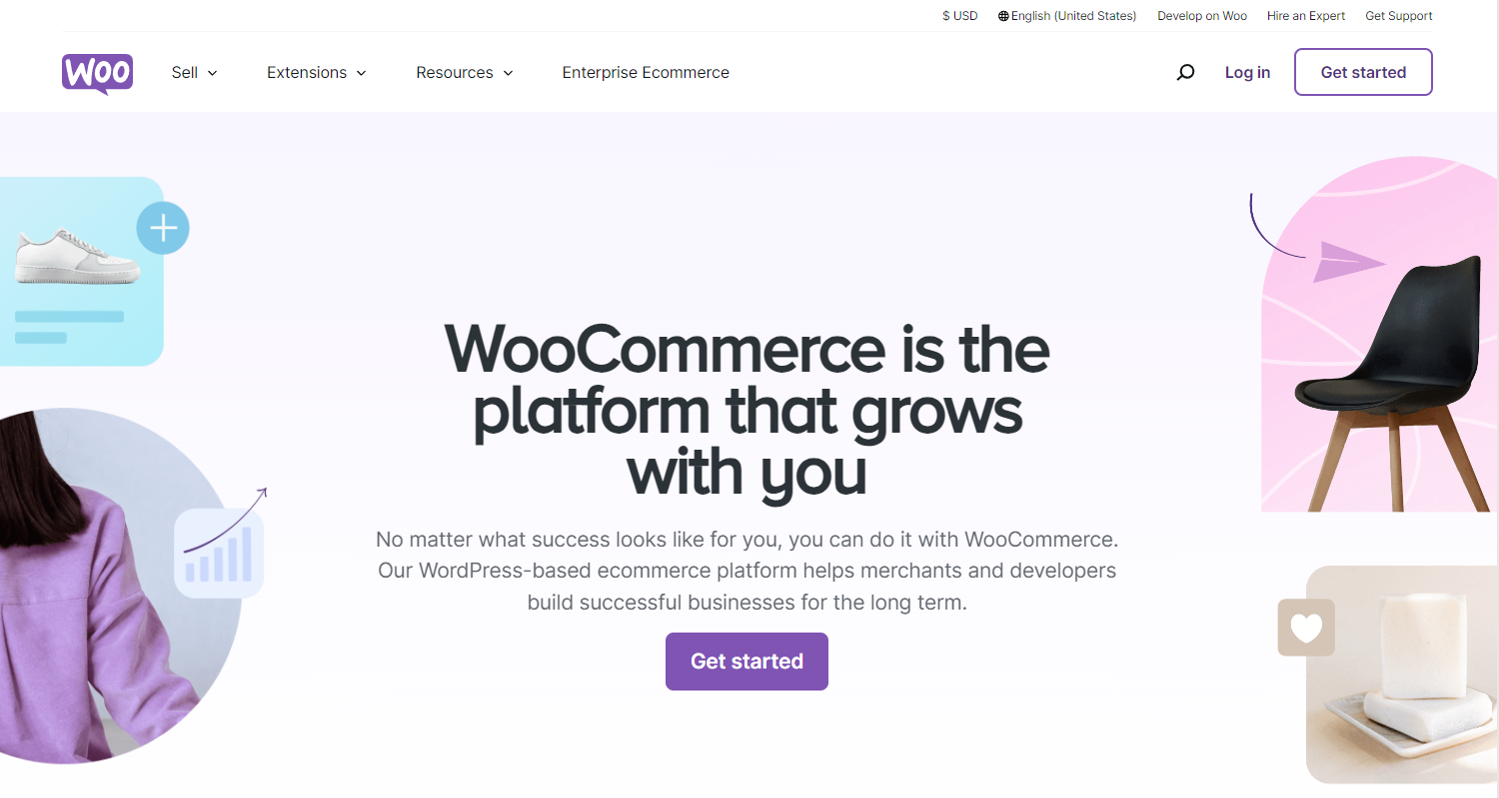
WooCommerce powers 28.19% of all online stores, according to BuiltWith data. This is how many websites are selling products via the WooCommerce platform. WooCommerce is the most popular ecommerce solution today.
This isn’t enough to make your ecommerce initiative successful, though. You need to consider the best hosting for the plugin. Doing that involves evaluating performance, reliability, security, and other factors. This article evaluates the extent to which the main types of hosting are suitable for WooCommerce stores.
Table of Contents
WordPress hosting is the best for a WooCommerce store
WordPress hosting is practically synonymous with Woocommerce web hosting. It is tailored for WooCommerce, which is a WordPress plugin. It offers optimized performance and features such as one-click installations, automatic updates, and specialized support. It typically comes with caching, CDN, and other optimizations.
On the downside, some hosts impose limits on plugins or customizations.
Managed WordPress hosting, in particular, is ideal for store owners who don’t want the hassle of managing their websites and appreciate specialized support.

Shared hosting is suitable for new and small stores
Shared hosting is the cheapest kind, making it suitable for new and small stores with limited budgets. Around 30% of all websites run on shared hosting.
Stores share resources with other websites, which can lead to slower performance, especially during high-traffic periods.
What does “high traffic” mean?
With around two billion websites on the internet today, it is very difficult to answer this question with one fixed number or even a range. A survey of 400 internet traffic analysts in the US on metrics such as bounce rates, monthly traffic, and click-through rates provides some suggestions, though. Most analysts said the websites they tracked analytics for got between 1,001 and 15,000 visitors a month (46%). 23% said the websites they tracked got between 50,001 and 250,000. The next-biggest group was 15,001-50,000 (19.3%), followed by 11% with 50,001-10 million. Less than 1% had more than 10 million visitors a month.
Shared environments are vulnerable to security issues if other sites on the server are compromised. As your WooCommerce store grows, you may outgrow the resources available on shared hosting.
Shared hosting is best for small WooCommerce stores with low to moderate traffic as well as users with limited technical expertise.
VPS hosting is best for medium-sized WooCommerce stores
This hosting market is projected to reach $8.1 billion this year. This type of hosting comes with dedicated resources, which improve performance and stability. Scaling CPU, RAM, and storage is easier as your store grows. You have some control over security settings.
However, VPS hosting requires some technical expertise for management and configuration. It’s most suitable for medium-sized stores that expect moderate to high traffic.

Do you have the budget for top performance? Dedicated hosting is the way to go
Dedicated hosting is the most expensive kind, but cumulatively, it’s still worth less than VPS hosting. This market is predicted to reach $6.4 billion by the end of 2024.
Dedicated hosting has full server resources, offering WooCommerce stores the best performance and reliability. Store owners have full control over server security and configurations.
It is only suitable for stores with high budgets. Furthermore, server management requires significant technical expertise unless you opt for managed dedicated hosting (even more expensive).
Large WooCommerce stores with high traffic volumes will find it a good fit. There is no better option for performance, security, and customization.
Cloud hosting is the best fit for stores with fluctuating traffic
In 2023, the cloud stored 60% of corporate data, and more than 94% of companies used one or more cloud services for storage. Cloud hosting can scale to handle traffic spikes and growth Its infrastructure ensures high availability and uptime. When evaluating uptime, consider the 2024 average of 99.95%.
Cloud hosting ensures reliable store performance and allows you to allocate resources as needed. Prices vary based on use, and it’s also relatively complex to set up and manage.
It’s a good fit for stores that need a balance between cost-effectiveness, performance, and scalability.