


Stories have a way to drag us into the narrative and keep our interest until the very end. The power of the stories made the marketers think, can we use it for business purposes? And the answer is yes.
The effect of such content has turned storytelling an imperative in marketing. It can help you to connect with the customers, build trust, and drive customer engagement. What makes some businesses hesitant about storytelling is their doubts about how they can compose compelling stories that revolve around their brand. If you are curious about how you can make that happen, take a look at the following tips.
Table of Contents
1. Analyze Your Target Audience
You won’t be able to write a good story if you don’t know what your audience wants. Since you use storytelling to affect a specific target audience, you need to know who they are.
Learning about their demographics isn’t enough. You should also focus on their interests, preferences, likes, and dislikes.
Use their social media profiles to gather information about what books or movies they like. That will show you what type of story will be the most effective.
You can also use Quora and ask the audience about movie/book preferences. Just specify what type of audience should answer the question (age, gender, location, likes, dislikes, etc.).
2. Share Different Stories
There are different things you can talk about in your stories.
If you are wondering which topics you can use in the business storytelling, here are some options:
- Your brand (the beginning, the struggles, path to success, etc.)
- Your products (how you came up with them, a creative story about their
purpose, etc.) - Your employees (who they are, what is their job, funny stories about
their experiences in the company, etc.) - Your customers (stories shared by satisfied customers or stories about
satisfied customers)
Always thrive to explore your originality and think of new stories and new topics to cover.
3. Use Your About Us Page
The corporate website is the business’s basis. Your About Us page is one of the first things your prospective clients will visit on your website. That is your chance to get their attention.
Use your findings about your target audience to construct a story they would like. There are numerous story options. You can mention your rocky beginnings, or simply use a motivational and inspiring tone throughout the story. It all depends on your audience.
The story you tell on the About Us page needs to be perfectly written, considering that it won’t be changed for a long time.
If you aren’t the best writer, make sure that you hire a professional writer to help you with this part. Websites like Top Writers Review can help you browse different writing services and pick out the best one.
4. Use Social Media
Social media is a great place to boost customer engagement. Team up social media power with storytelling and you’ll have your winning combination.
For example, post an Instagram Story that shares a story about your product and encourage the users to share their opinion through a poll.
You can also repost your customers’ posts sharing stories about your products.
Social media is a place where customers feel most comfortable engaging with brands, so be consistent with your posting. You can even make a series about your employees, for example.

5. Enhance Storytelling with Visuals
Approximately 65% of the population are visual learners. Considering that enhancing your stories with images or videos will have a great effect.
For example, instead of writing a story, create a short video. Storytelling through videos is a good choice for advertisement.
Whenever there is an opportunity to enhance a story with visuals, take it.
You can use images that support your story and that provide evidence. Images also make it easier for users to imagine the story you are telling and, therefore, memorize it easily.
Infographics are also an option that you should consider. They are easy to make, but they support your claims and give your stories some color.
6. Improve Your Email Marketing
Emails are a more personal way of communicating with your customers. Use this to share stories with the users and encourage them to engage with you.
One of the things you should consider is to address the user by its name before you get to the story.
Take a look at how Charity Miles does it:
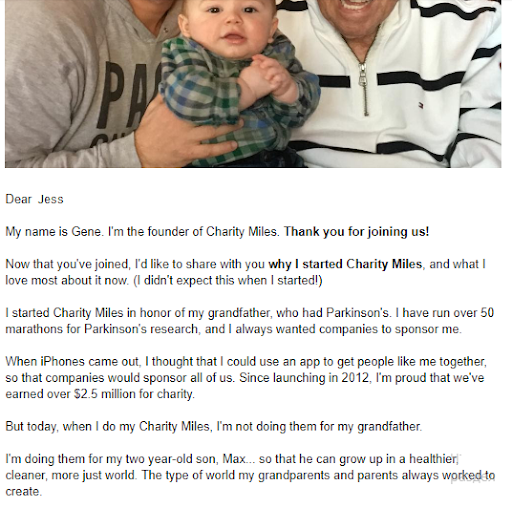
In this way, the customer will feel like you are friends, sharing stories about your life, ups and downs, business success, etc.
Creating a close connection with your customers is one of the best ways to drive engagement and ensure customer loyalty.
7. Make The Stories Customer-Centric
Ultimately, people love stories that are somehow about them. When they can relate or see some benefit for themselves, people will pay close attention.
A customer-centric approach to stories helps successful brands to boost engagement. Just take Coca-Cola, for example. Their Christmas storytelling commercials are always about happy customers and we all love them!
This doesn’t mean you should strictly focus on customer stories or stories about customers. It means that the point of the story can revolve around them.
Let’s say you are writing a story about your brand, how it came into existence or something similar. When discussing what inspired you to start your business, mention your thoughts about how your products can benefit the customers.
The customer-centric approach can also be used at the end of the story by stating your business’s intentions to make customers’ lives easier.
Some Final Thoughts
The art of storytelling can help you drive customer engagement, raise awareness about your brand, and, ultimately, increase sales. Remember to let your business’s personality stand out when applying these tips in your pursuit of customer engagement.
The stories you tell should bring you closer to your customers and encourage them to engage with your business. To do that, you should stay true to your brand and emphasize your authenticity.
FAQ: Business Storytelling to Drive Customer Engagement
What is business storytelling, and why is it important for customer engagement?
Business storytelling uses narrative techniques to convey a company’s values, mission, products, and services in a compelling and relatable manner. It goes beyond traditional marketing by creating an emotional connection with the audience. This emotional engagement is crucial because it fosters trust, loyalty, and a sense of community among customers. Stories help humanize a brand, making it more memorable and relatable. They can illustrate how a product solves a problem or enhances a customer’s life, leading to deeper connections and increased customer engagement.
How can a business identify the right stories to tell?
Identifying the right stories to tell involves understanding your audience’s interests, values, and pain points. Start by gathering customer feedback, conducting surveys, and engaging in social listening to discover what resonates with your target market. Highlight stories that reflect your brand’s core values, showcase customer success stories, and demonstrate the impact of your products or services. Additionally, employees should be involved by sharing their experiences and insights. This not only adds authenticity but also provides diverse perspectives. The goal is to choose stories that align with your brand message and connect emotionally with your audience.
What are some effective ways to incorporate storytelling into marketing strategies?
Incorporating storytelling into marketing strategies can be done through various channels and formats. Create compelling content for your website, blogs, and social media platforms that narrates your brand’s journey, mission, and impact. Use customer testimonials and case studies to showcase real-life success stories. Videos and podcasts are also powerful storytelling tools, offering a more personal and engaging experience. Additionally, ensure that your email marketing campaigns, advertisements, and even product descriptions contain narrative elements that captivate and resonate with your audience. Consistency across all channels helps reinforce your brand story and build a cohesive narrative.
How can storytelling enhance the customer experience?
Storytelling enhances the customer experience by creating a more engaging and memorable interaction with the brand. It helps customers see the value and benefits of a product or service through relatable narratives. You build trust and credibility by sharing stories of how your products have positively impacted others. Storytelling also makes your brand more relatable and human, fostering a stronger emotional connection. This emotional engagement can increase customer loyalty, advocacy, and a willingness to share their own positive experiences, further promoting your brand through word-of-mouth.
What are common pitfalls to avoid when using storytelling in business?
Common pitfalls in business storytelling include being inauthentic, overly promotional, or inconsistent. Authenticity is key; customers can easily detect when a story feels forced or insincere. Ensure your stories are genuine and reflect your brand’s values and mission. Avoid making your stories too sales-focused; aim to educate, entertain, or inspire your audience. Consistency is also crucial – your brand’s narrative should be coherent across all platforms and touchpoints. Finally, neglecting to understand your audience can lead to stories that fail to resonate or engage. Always tailor your storytelling efforts to your target market’s interests and needs.
